
The second record disagreed with the first, and the customer had not changed between the two visits. The operator pulled the session photos up on screen, and the answer was on the ceiling: in the morning capture the blinds were down and the ceiling light was on; in the afternoon capture the blinds were open, and the sun was laying a bright stripe across the front of the platform. The room closed the blinds, switched the lamp back on, taped the platform’s position on the floor, and took the record again. This time the two pages agreed. Rooms run into this within weeks of installation: two captures of the same customer that will not sit beside each other, with nothing wrong on either page and nothing wrong with the foot. The difference is usually not the customer and not the equipment. It is where the platform sits and what the light in the room was doing when each record was taken. Placement and lighting are not decoration around a measurement. They are conditions, and conditions decide whether two records can be compared at all. This article works through the placement and lighting decisions experienced rooms make, in the order they make them, with the sentences they write down afterwards.
The floor decides where the platform sits, the light decides what the camera sees
Installation talk usually starts with the floor, and it should: the sensing surface wants a level, stable position with room for the customer to walk on and off, and a spot where staff can stand to run the session. But there is a second decision hiding in the same conversation, and rooms that skip it pay for it later. A foot assessment system in this class combines three things: a pressure sensing surface, a camera for posture capture, and the analysis software that reads both. The pressure side reports how load arrives and distributes under the foot. The camera side records how the foot and the lower limb present. Each half has a different relationship with the light in the room.
The pressure surface does not care whether the sun is out. Load is load. The camera, by contrast, shares the room with every window, lamp and polished floor tile in it, and it records whatever reaches its view. A shadow that falls across the capture area is raw material for the camera and irrelevant to the pressure sensors, which is exactly why a record can look right in one half and odd in the other. Anyone who has compared a morning capture with an afternoon capture in a room with a large window has seen this happen without either page being wrong.
So the placement decision has two parts, and both belong on the plan before the equipment arrives: where the surface sits relative to doors, walkways and the operator’s position, and where light comes from and at what times of day. Rooms that write both parts down at installation never have to reconstruct them later. Rooms that improvised discover the second part the first time two records disagree, which is the most expensive moment to learn it.
Daylight is a variable, not a backdrop
Sunlight is the one light source nobody in the room controls. Its angle moves through the day, its intensity changes with weather and season, and a surface that sits in soft, even light at ten in the morning can carry hard stripes across it by four in the afternoon. A capture taken at ten and a capture taken at four were not, strictly speaking, taken in the same room. Every comparison drawn between them carries that unrecorded difference with it.
For the camera side of the record the effect is direct. Contours shift as the light moves, edges sharpen or wash out, and the same foot captured under two different daylight conditions can produce two posture images that look less alike than they should. Nothing on either image says why. The record looks ordinary, which is precisely what makes a daylight difference dangerous: it does not announce itself, it quietly splits the folder into pages that cannot be laid side by side.
The working answers are unglamorous. Keep the capture area out of direct sun. Fit blinds and make closing them part of the session routine rather than a decision somebody makes by mood. Where a room genuinely depends on daylight, fix the appointment time instead, so that successive visits happen under roughly the same sky, and write the time on the sheet. What matters is not finding ideal light. It is finding repeatable light, because repeatable is what comparability is made of.
Shadows and reflections do the quiet damage
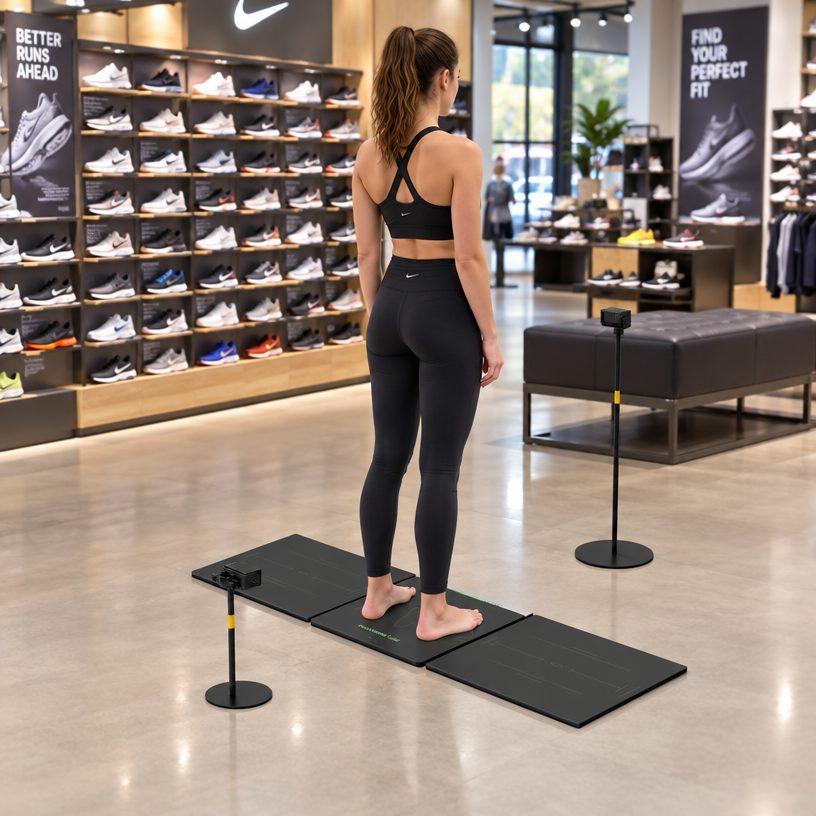
A shadow across the sensing surface or the camera’s view draws an edge where the foot drew none. On screen, that edge can read like anything: the boundary of an arch, the margin of a load area, the edge of contact. An operator who does not know a shadow fell across the frame during capture has no way to tell the difference, and a reader further down the line certainly does not. The page carries no memory of the ceiling light being behind the customer’s shoulder.
Reflections misbehave the same way. Polished tile, glass partitions and mirrors throw highlights into the camera’s view; a window behind the operator can bounce light back across the surface; a customer standing between the lamp and the platform casts a shadow forward into the frame. None of this is equipment fault and none of it is customer behaviour. It is room behaviour, and the room can be arranged.
The habit that catches all of it costs half a minute: before the customer steps on, the operator looks at the surface and at what the camera sees, and asks one question — is there anything in this view that is not the customer? Stripes, bright lines, a shadow with a shape. If the answer is yes, the light gets fixed first and the capture happens second. A recapture costs two minutes. Explaining a shadow that got read as a finding costs a season of trust.
Choose the spot once, and keep it
The cheapest comparability tool a room owns is a fixed position for the equipment. Same corner, same orientation to the door and the window, same distance from the wall, marked on the floor if the room gets rearranged often. A photograph of the corner on the day of installation settles arguments later. When the platform sits in the same place under the same light every time, the conditions of every record the room has ever taken are already written, without a single word.
Rooms do move equipment: a renovation, a second site, a reshuffle that pushes the platform against a different wall. Every move re-opens the lighting and placement questions from the beginning, and a move done casually can quietly break the comparability of every record taken before it. Our article on moving a platform between sites walks through the re-check list a room should run before the first capture after a move, and it is shorter than most people expect.
The lamp deserves the same discipline as the platform. A floor lamp that gets dragged around the room is a variable wearing the costume of a fixture. Ceiling lighting or a bracketed lamp in a fixed position, noted once on the room’s setup sheet, keeps the light among the things that stay the same. The goal of all of this is dull by design: a room where the only thing that changes between visits is the customer.
Turn the lighting into a written condition
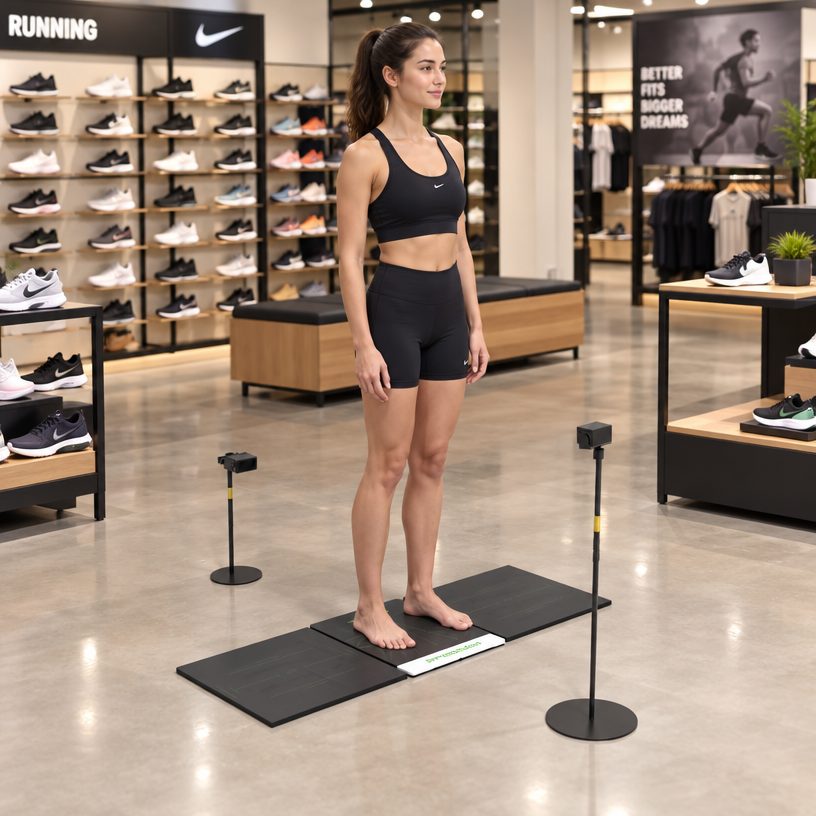
Fixed positions and closed blinds still need one more thing: a line on the session sheet. The line is short — blinds down, ceiling light on, no direct sun, time of day — and it belongs in the same place every time, the way the number of passes and the capture mode belong there too. The printed report carries a shortened version of the same line, because records travel to readers who were not in the room and cannot reconstruct what the sky was doing that afternoon.
Written conditions are what make a folder comparable across visits, the same way calibration and care keep the measurement itself comparable, as our article on calibration, care and a record that stays comparable sets out. Conditions and calibration are two halves of the same discipline: the instrument stays honest, and the circumstances of each capture stay known. Skip either half and the folder starts accumulating pages that look alike and are not.
The writing also protects the room in the disagreement conversation. A foot measured at three points in a working day does not produce three identical records, as our piece on the same foot at three points in a working day explains, and lighting is one more reason among several. When two pages differ and the conditions are written on both, the conversation starts from facts. When the conditions are missing, the conversation starts from doubt, and doubt spreads to everything else in the folder.
What a shadow in the room can be mistaken for
The misreadings worth naming are specific. A shadow edge across the capture area gets read as an arch boundary. A highlight striping the surface gets read as a change in how contact presents. A posture image whose edge washed out under bright backlight gets read as the foot’s shape having changed since the last visit. Every one of these is a condition wearing the costume of a finding, and any of them can end up as a sentence about the customer’s foot in a printed report.
The line we give buyers during demonstrations is the line that applies here: the equipment produces measurements and images; it does not interpret them, and it does not diagnose. Interpretation belongs to a qualified professional, and interpretation needs the conditions of the capture in front of it. When something on the page looks unusual, the first question in an experienced room is not what does this mean but how was this taken. Very often the answer to the second question retires the first.
That is also why the room’s response to an odd-looking page is a recapture under controlled light, not a comment. Nothing about a shadow needs managing in the customer’s feet. The page needs taking again with the blinds down, and the folder needs the second version, with the first kept on the machine and the conditions of both written down. An artifact that gets recaptured becomes a training story. An artifact that gets interpreted becomes a wrong sentence in a professional’s folder.
When two records do not match
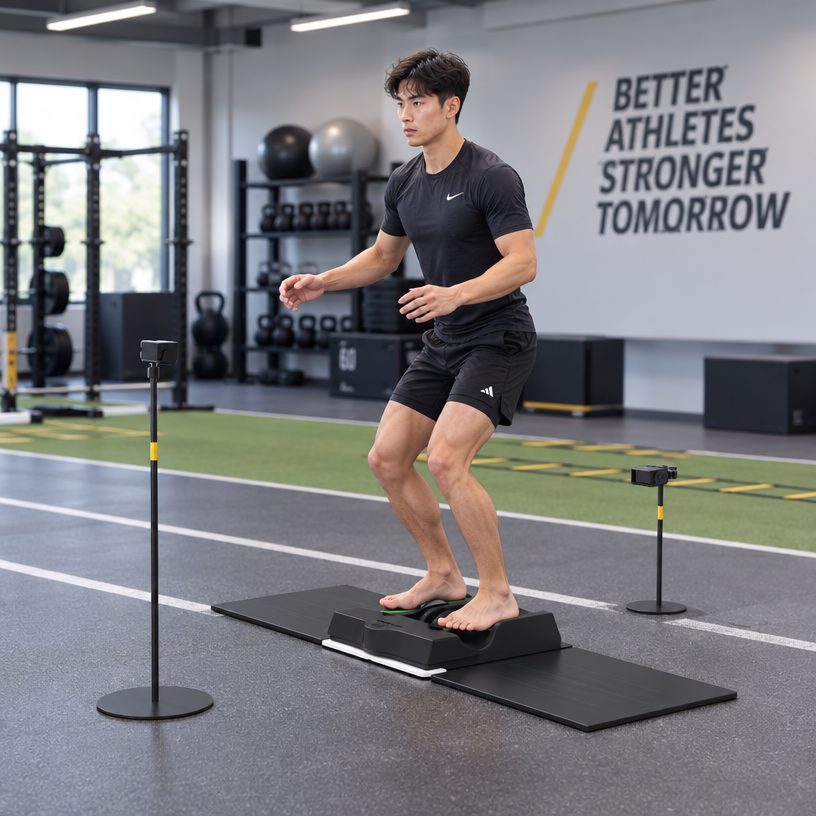
The sequence is worth fixing as a habit. Two records of the same customer disagree; the room checks the sheet first. Were the blinds down both times, the lamp on both times, the platform in the same corner, the customer captured at a similar hour? If any answer is no, the difference already has a candidate explanation, and the honest response is to repeat the capture under today’s controlled conditions and file the pair with the conditions of each noted beside it.
If the conditions were the same and the records still differ, the question moves to the customer’s side: different shoes, a different interval since the last visit, a season of a new sport in between, a body weight that moved. Those are real differences and they belong in the record, not in the bin. Only when conditions and customer both come back unchanged does the question turn to the instrument itself, and that is the re-check and calibration conversation our article on keeping a record comparable covers in detail.
And if a record has to be set aside as not comparable, the sheet says so, in plain words, next to the date. Nothing is deleted; the raw capture stays on the machine. But the folder now tells the truth: this page was taken under different conditions and cannot be laid beside the others. A folder that admits its exceptions is worth more than one that looks perfectly consistent and is not.
Frequently asked questions
Do we need to renovate the room or install special lighting before the platform arrives?
No dedicated construction is needed. The equipment works in an ordinary consultation room with consistent, moderate lighting. What matters is repeatability: keep the capture area out of direct sun, use blinds or a fixed lamp, and place the platform where the position can be kept. Our team advises on placement during installation and by remote assistance afterwards.
Can a capture taken in the morning be compared with one taken in the afternoon?
Only if the lighting was controlled to be the same. Daylight changes angle and intensity through the day, so two captures taken under open blinds at different hours were effectively taken in different light. Either fix the appointment time, close the blinds for every session, or note the lighting condition on the sheet so the reader knows what was done.
Does a shadow across the platform ruin the record?
It can add edges and contours that are not the foot, and those can be mistaken for real contact boundaries. The operator should review the capture on screen before filing it: if stripes or shaped shadows are visible, fix the light and take the record again. A recapture costs minutes; an artifact read as a finding costs far more.
Does what the customer wears affect the camera posture capture?
Ordinary street clothing is workable, but the operator should know what the camera cannot see through it and note the clothing condition on the sheet. Shoes off, trousers rolled where practical, and the same clothing convention every visit keeps successive posture images comparable. Our article on posture capture in street clothes covers this in detail.
What should be written on the session sheet about lighting?
One short line: whether blinds were closed, which lights were on, whether direct sun was excluded, and the time of day. The same line in shortened form belongs on the printed report. Written conditions are what allow a later reader to tell a lighting difference from a real change in the foot.
Can the software tell the difference between a shadow and real contact?
No. The system produces measurements and images; it does not label artifacts and it does not diagnose. Reviewing a capture for lighting artifacts is the operator’s job, and interpreting what is on the page belongs to a qualified professional. When a page looks odd, take it again under controlled light before anyone interprets it.
If we move the platform to another room, can old records still be compared with new ones?
Only after the re-check has been done: same or matched lighting, the same orientation, and a verification capture confirming the instrument still reads the way it did before the move. Until that is written down, treat the records before and after the move as different conditions rather than one continuous baseline.
What we would do next
Walk the room this week with the two questions from this article: where does the light come from, and will it be the same at the next visit. Pick the platform’s spot, mark it, decide the blinds rule, and add the lighting line to the session sheet and the printout. Our article on posture capture in street clothes covers the other half of the camera’s conditions — what the customer wears — and the re-check list for moving a platform applies the same discipline to a change of room. The F2-FMP system page describes how pressure sensing, camera posture capture and the analysis software fit together in one workflow, and the FAQ page carries the operational answers we send most often by message. If you are planning an installation and want the placement conversation before the equipment ships, write to us and we will go through the room with you.
This article is intended for professional and educational reference. It is not medical advice. Foot assessment equipment produces measurements and images; clinical interpretation and any decision about care remain the responsibility of a qualified professional. Certification scope is limited to the documentation we hold: European Union certification and ISO quality system certification.