
Most problems with a first order of custom orthotic insoles for flat feet
do not come from the insole being badly made. They come from the insole being made for a different
shoe. A clinic, a footwear retailer or an orthotic workshop can agree a shape, receive a
clean production run, and still discover that the pair does not sit properly inside the footwear
most of their customers actually wear. The order was technically sound and commercially useless.
This article is written from the buyer’s side of that transaction: the clinic manager choosing a
supplier, the retailer building an insole offer, the workshop adding capacity. It sets out what to
confirm before a first order — how the shape is matched to a shoe, how mixed models and sizes are
handled, what samples and prototypes should look like, how quantity and lead time are planned, and
what to settle about reorders. People with flat feet are the audience here; that phrase is not a
specification. An insole provides support and spreads load under the foot, and deciding what any
individual needs remains a professional judgement. Nothing in this article is medical advice.
Why flat feet describes an audience, not a specification
“Flat feet” is useful shorthand for a group of people whose medial arch sits lower than average,
or whose arch flattens when the foot is loaded. It is a description of a population that clinics,
retailers and workshops plan for, and it is where a lot of planning conversations start. It is not,
however, a product definition, and treating it as one is the source of most first-order mistakes.
Two people can both be described this way and still be served by quite different insoles, because
the variables that decide a shape sit elsewhere: foot length and width, how much the arch changes
between a non-weight-bearing and a weight-bearing position, the shoes the person wears, and what
they do in them. A runner and a commuter in the same size and the same category can need different
shapes for reasons that have nothing to do with the label.
What an insole does — and what it does not do
An orthotic insole is a shaped layer that sits under the foot. Its working job is to provide
support, to distribute load across a wider area of the sole, and to hold a consistent position
inside the shoe. That is a mechanical description, and it is the one a buyer should use when writing
a specification or a marketing line. It is deliberately narrower than the claims that appear in this
category.
What we do not do is sell insoles as a way to change foot structure or to promise an outcome. We
build shapes to agreed specifications; the assessment of any individual and the decision about what
suits them belong to a qualified professional. Suppliers who blur that line create a problem for the
buyer as well as the customer, because an over-promised product is harder to support, harder to
explain and harder to sell twice.
What actually defines an order
An order is defined by three things the buyer controls: the shape (which shoe it is trimmed for,
which arch profile it carries), the material and thickness build-up, and the commercial pack
(quantities, sizes, labelling, packing). Everything else is a consequence. When a clinic asks for
“an insole for flat feet”, the useful next move is to convert that into those three decisions, and
that is what the rest of this article unpacks.
Matching the shape to the shoe, not only to the foot
The single most common fit complaint after a first delivery is that the insole is either too
thick for the shoe or too narrow at the forefoot, so the shoe becomes uncomfortable or the insole
crowds the toes. The insole was fine in isolation. The mismatch was between the insole and the
footwear, and that is a question the buyer can settle before ordering.
Start from the shoe the customer wears
Ask which category of footwear the insole has to live in. Shoes differ in three ways that
matter to an insole: whether the original sockliner can be removed to make room, how much depth
there is above the foot, and whether the heel is raised. An insole built for a running shoe, where
the sockliner lifts out and the volume is generous, will often be too deep for a close-fitting dress
shoe. A shape built for a flat, low-volume shoe will feel unsupported in a walking boot. The buyer
does not need to survey every shoe; picking two or three representative categories is enough to
define a realistic brief.
Trimmed to a last, or supplied as a blank
Suppliers handle the shoe-matching step in one of two ways. Some trim the insole to a specific
last, so the delivered shape is sized for a named shoe construction; others supply a fuller blank
that is trimmed at the point of fitting. Both are legitimate. The question to ask is which one you
are buying, because the answer determines what your staff do at the fitting stage and how much
wastage you carry. If the supplier trims to a last, ask which one, and confirm it matches the shoes
your customers turn up in. If you buy blanks, ask what tool and template are used to trim, so that
two staff members produce the same result.
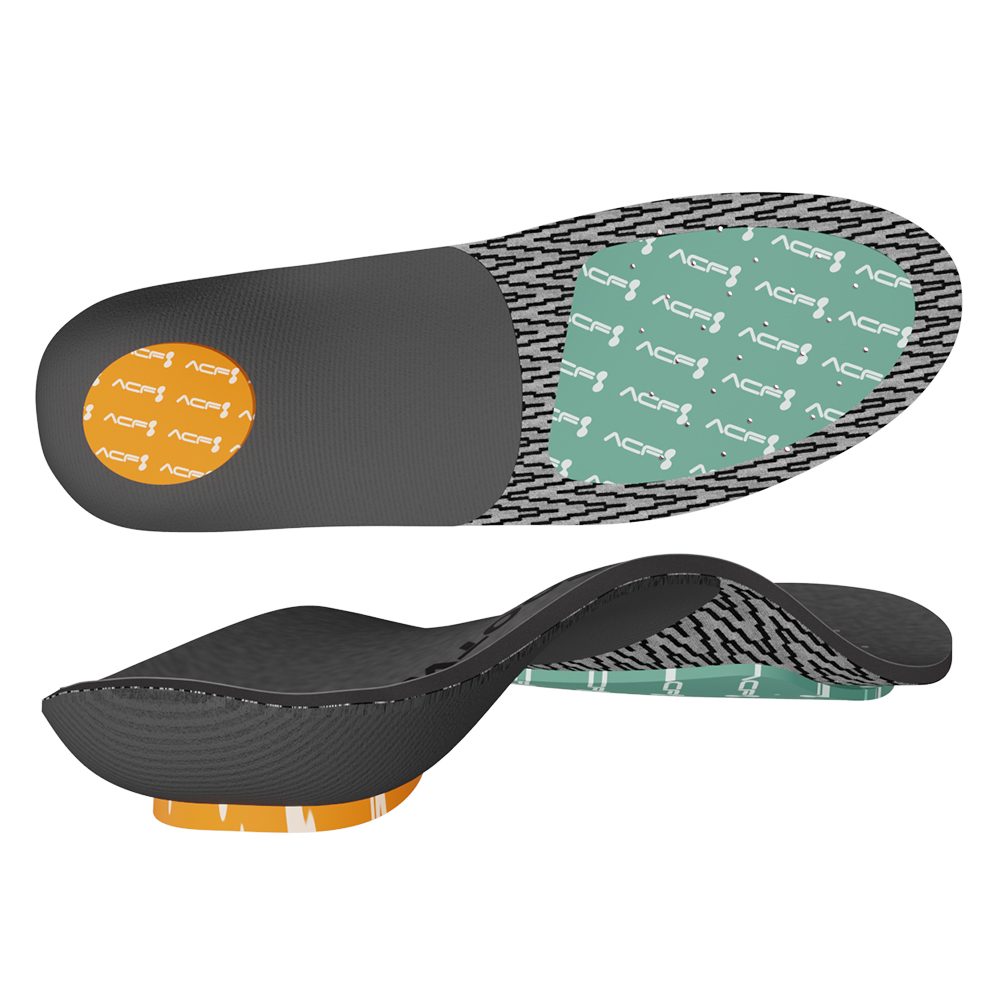
Forefoot width and heel seat
Two dimensions do most of the work in the fit conversation. The forefoot width determines whether
the insole crowds the toes or leaves a gap; the heel seat determines whether the rearfoot sits
centred and stays put. Ask your supplier how the shape behaves at both ends, and whether the same
underlying shape can be offered in more than one forefoot width. Being able to answer that question
is usually the difference between a supplier who understands fitting and one who only understands
moulding.
Mixed models and mixed sizes: how small orders work in practice
Retailers rarely want one insole. They want an assortment — a couple of models, several sizes
each — because a shelf with a single product does not sell and a clinic with one shape cannot serve
a varied caseload. This is where the practical question of minimum order quantity meets the
practical question of range, and it is worth understanding how a factory actually handles it.
Our own insole MOQ is 200 pairs, and that number can be mixed across models and sizes. That
matters more than it sounds. A single-model minimum of 200 pairs forces a small clinic to commit
hard to one shape; a mixed minimum lets the same 200 pairs cover a starter range with several
models in the sizes that actually move. When you are comparing suppliers, ask the same question of
each of them, and check whether “mixed” means mixed models, mixed sizes, or both.
Sizing brings its own housekeeping. Ask how the supplier labels pairs and whether they will pack
by size, by model or by destination. Ask whether sizes are sold as pairs only or whether singles are
possible, because a fitting service that replaces one side benefits from singles while a retail pack
does not. And ask how the shapes are marked left and right, since an unmarked pair in a busy fitting
room gets mixed up. None of this is difficult, but unagreed, it becomes rework.
Samples and prototypes: what to ask for before a production run
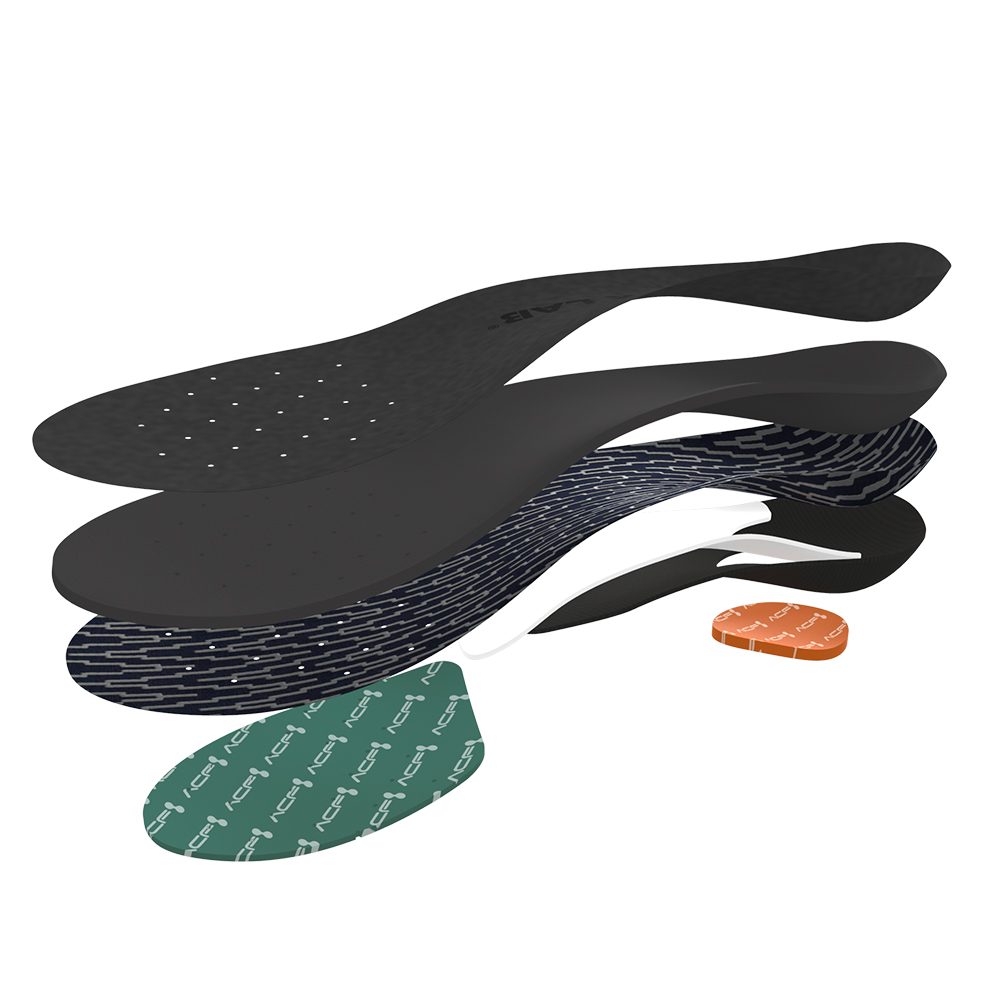
No buyer should commit to a production quantity before holding the product. The useful
distinction is between a sample and a prototype: a sample shows you the standard shape and build,
while a prototype shows you the specific shape you asked for, produced to your brief. If your
offering is standard, sample the standard range. If you are commissioning something specific,
prototype first.
Order your samples in the sizes you actually intend to sell, not in one convenient middle size.
Width and thickness problems show up at the extremes, and a single sample in the middle will pass a
check it should have failed. Insole samples ship within three days, which makes it realistic to
check several models in a short window rather than choosing from photographs.
When the sample arrives, have the person who will actually fit it assess it, not only the person
who placed the order. Ask them to check three things: the thickness in the shoe the customer is
likely to wear, the width across the forefoot, and the position of the support under the arch. If a
prototype is being made to your specification, ask what the supplier needs from you to build it —
foot data, a scanned shape, an existing insole to copy, or a written brief — and confirm the
deliverable before production starts. A prototype that is reviewed against a written brief is a
production sample; a prototype reviewed against nothing is a guess.
Quantity, lead time and planning the first order
A first order is a forecast dressed up as a purchase. The buyer’s job is to size it so that it is
small enough to be safe and large enough to be useful, and both ends of that are easier to judge
once you know how the factory actually runs.
Standard insole production runs at roughly 500 to 1,000 pairs per day, so a mixed starter order
of a few hundred pairs is a short run rather than a special project. Delivered by express, insole
samples arrive in six to seven working days; production follows the same pattern once the order is
confirmed. That is fast enough for a clinic to test a new model with real customers before
committing further, which is exactly what a first order should be for.
Plan the reorder at the same time you place the first order. Ask what the lead time is for a
repeat, and whether a repeat uses the same shape or goes back through setting up; a supplier whose
reorders are slower than their first orders has usually not kept the specification. If your demand
is seasonal, tell the supplier which months matter, because a factory scheduling capacity responds
better to a known peak than to an urgent request in the middle of one. And decide now who owns the
shape file: if you may move suppliers later, ask what you will receive so that the next one can
reproduce what you approved.
After-sales, reorders and keeping the shape consistent
Insoles are a consumable product, which means the relationship matters beyond the first
shipment. Two questions decide whether a supplier is worth a second order: how a fit problem is
handled, and whether the shape stays the same. Both should be settled before the order, not after
the complaint.
On problems, agree the process rather than a promise. If a batch arrives with a size marked
wrongly, or a shape that does not match the approved prototype, what happens? Ask whether the
supplier wants photographs and measurements, whether they will remake the affected pairs, and who
carries the freight. We keep a per-customer after-sales group that includes our engineer, so a
question reaches someone who can answer it without a chain of forwards — and, on the machine side,
we run a seven-day test before dispatch, on the principle that checking earlier is cheaper than
putting something right later.
On consistency, agree how the approved shape is recorded. Ask the supplier to confirm that
reorders are produced from the specification you signed off, and ask what happens if the raw
material changes between batches. Custom insoles are also available as ODM and OEM, and both are
worth discussing if you intend to build a range under your own brand; the commercial terms differ
by project, and we would rather talk through the scope than quote a figure in an article like this
one. What we will not do is describe what any individual needs, or claim that an insole changes foot
structure. That decision sits with the professional who fits it.
Frequently asked questions
Do you supply custom orthotic insoles for flat feet?
Yes, but the phrase describes the audience rather than the product. People with flat feet are one
of the groups clinics, retailers and workshops plan for, and we produce insoles to an agreed shape,
material and build. The insole provides support and spreads load under the foot. Assessing what any
individual needs is a professional judgement, and we do not present an insole as a way to change
foot structure.
What is the minimum order for custom insoles?
The insole minimum order is 200 pairs.
Can one order mix different models and sizes?
Yes. Those 200 pairs may be mixed across models and across sizes, which allows a small clinic or
retailer to open with an assortment rather than committing everything to a single shape.
How fast can I get samples?
Insole samples ship within three days of the request. Express delivery typically takes six to
seven working days from dispatch.
Can you produce to a shape we already use?
Yes. If you have an existing insole, a scanned shape or a written brief, we can work from it. For
anything non-standard we would produce a prototype first so that you can check the fit before
production quantity is committed.
Do you offer OEM or ODM for insoles?
We accept both ODM and OEM for insoles. The commercial arrangement depends on the scope, so it is
discussed per project rather than set as a single standard term.
How long does production and delivery take?
Standard insole production runs at roughly 500 to 1,000 pairs per day. Air freight typically takes
ten to twelve working days and ocean freight around thirty to thirty-five, depending on destination
and how the order is shipped.
What we would do next
If you are planning a first order, write the brief before you ask for a quote. Name the shoe
categories the insole has to fit, the forefoot width you need, the sizes you intend to stock, and
the quantity you can realistically sell in a season. That brief is what turns “an insole for flat
feet” into something a factory can actually produce and a clinic can actually fit.
Then ask two suppliers the same questions and compare how specific the answers are. A supplier
who can describe their trimming process, their sampling time and their reorder approach is easier to
work with than one who answers only in adjectives. Our range is listed on the
insole categories page, and we have written separately about
setting up an in-house orthotic service and about
whether custom orthotic insoles are worth it for a practice. If you would
like a view on your brief, send it through the contact page and we will tell
you what fits and what does not.
This article is intended for professional and educational reference. It is
not medical advice. Foot assessment equipment produces measurements and images; clinical
interpretation and any decision about care remain the responsibility of a qualified professional.
Certification scope is limited to the documentation we hold: European Union certification and ISO
quality system certification.