
Ask ten suppliers what “arch support” means and you will get ten
descriptions of the same word pinned to quite different products. One means a raised
medial zone in a soft material. Another means a rigid shell shaped to a scanned foot. A third means
a firmer insert layered into an existing insole. All three can be called arch support, and none of
them tells a buyer what is actually being made.
The useful question is not what arch support is, but how it is specified. Behind every custom
insole is a small set of decisions — an arch profile, a material build, and a forming method — and
each one can be written down, reviewed and repeated. This article walks through that chain from the
production side: how foot data becomes a shape, how thickness and stiffness are placed across the
insole, how a flat sheet is turned into a three-dimensional form, what the buyer has to supply, and
how a specification is agreed before anything is produced. People with flat feet are one of the
groups this work serves; the article is about how a product is defined, not about what any
individual should wear, and it is not medical advice.
What “arch support” means as a specification
In manufacturing terms, arch support is not a single feature. It is the result of four variables
that are chosen together and recorded together, and a specification is only complete when all four
have been decided.
The first is the arch profile — the height and contour of the medial surface the insole presents
under the foot. The second is the material build: which materials are used, where they sit, and how
thick they are in each zone. The third is rearfoot control, meaning how far the shape wraps or
supports behind the heel. The fourth is the forefoot build, from the width across the ball of
the foot to whether the surface is cushioned or firm. Change any one of these and the product the
customer receives is a different product, even though the label still says arch support.
Why the word needs unpacking before an order
A buyer who orders “arch support” and a supplier who builds “arch support” can be describing
different things without either being dishonest. The mismatch only surfaces at the fitting stage,
when the insole is either firmer than expected, higher under the arch than expected, or shaped for a
shoe the customer does not own. Unpacking the term into those four variables before the order is the
cheapest way to avoid it.
What support is, and what it is not
It is worth being precise here because the word carries implications the product does not. An
insole provides support under the foot, holds the foot in a consistent position inside the shoe, and
spreads load across a wider area of the sole. That is a mechanical description and it is the one to
specify against. We do not build insoles as a route to changing foot structure, and we do not make
claims about outcomes. What any individual should wear, and why, is a professional judgement made by
the clinician who assesses them. We manufacture to a specification; we do not make that judgement
for anyone.
From foot data to a shape: how the arch profile is set
Every custom insole starts as some record of a foot. The form that record takes varies — a
scanned contour, a plaster impression, a tracing on paper, or an existing insole sent in to be
copied and modified — but the job of the first production step is the same: turn that record into a
shape file that can be formed.
What the capture actually records
A foot scan records geometry: the outline, the length and width, and the contour of the sole,
including the arch profile. What it does not record, and cannot, is what the foot should feel like
or what a particular person needs. Those questions are settled by the professional doing the
assessment, and their answer is what the specification encodes. When we receive foot data, we read
it as a measurement to reproduce faithfully, not as an instruction to be interpreted clinically.
That separation keeps the product predictable and keeps clinical judgement where it belongs.
Static and weight-bearing: two different shapes
A foot looks different depending on how it is loaded. A capture taken with the foot unloaded and
one taken while the foot is bearing weight will not produce the same arch profile, because the arch
behaves differently under load — and this is exactly the point that matters most for the group
described as having flat feet. The specification therefore has to state which condition the shape is
based on, because it changes the profile the file describes. A supplier who never asks this question
is going to produce a shape that matches only by luck.
Where the profile is set
Once the capture is agreed, the arch profile is set in a shape file: the medial surface is raised
or lowered to match the recorded contour, the heel seat is defined, and the outline is matched to
the shoe the insole is intended for. At this stage the profile is a line on a screen, and it should
be reviewed as one. A comfortable way to do this with a supplier is to ask to see the shape before
forming, so that both sides agree on the profile while it is still cheap to change.
Material and thickness zones: where support is placed
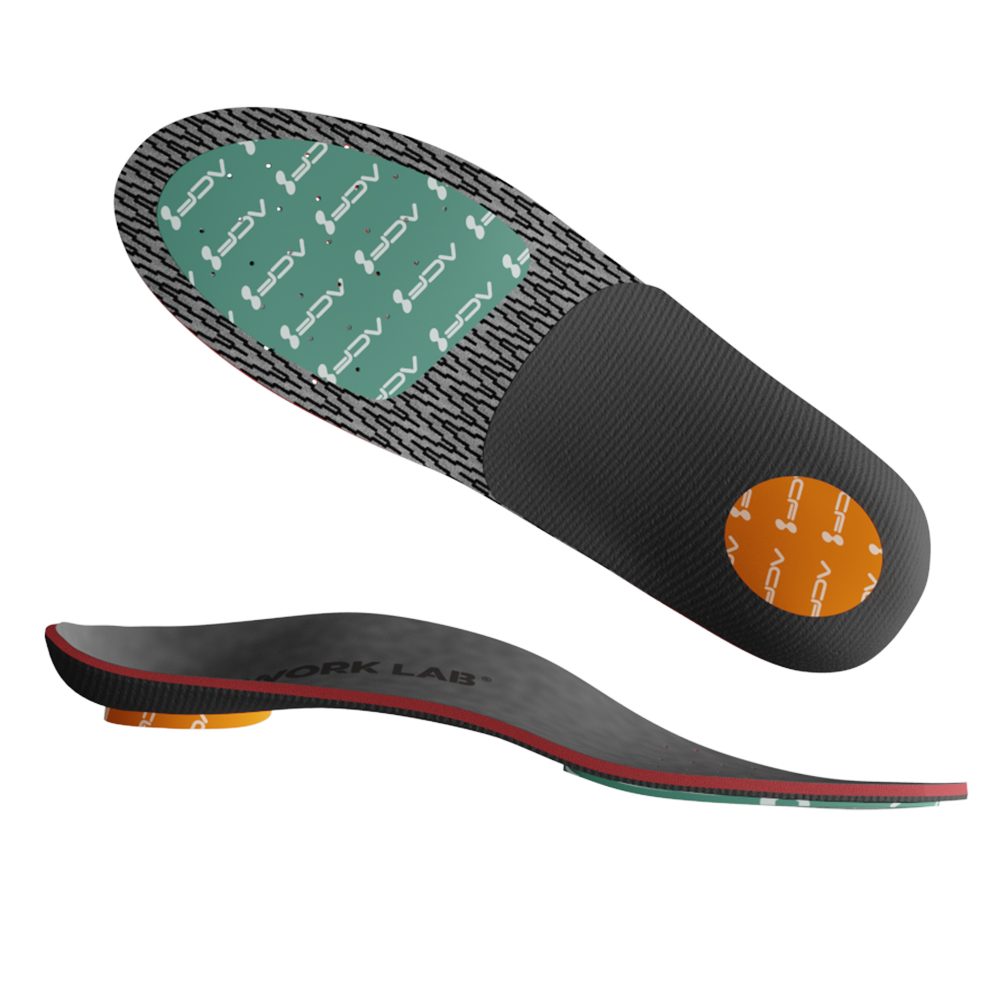
A custom insole is rarely one material through its whole thickness. It is built in zones, and the
specification describes what happens in each. The reason is simple: different parts of the foot need
different behaviour, and a single uniform sheet cannot deliver that.
The zones that matter most are the heel seat, the medial arch, the metatarsal area and the
forefoot. In the heel, a firmer, more wrapped structure keeps the rearfoot seated and stable. Under
the medial arch, a controlled rise provides the support the product is named for. Under the
metatarsal area, the question is cushioning rather than control. At the forefoot, the priority is
width and a surface that does not crowd the toes. A well-written specification names the material
and the relative thickness for each zone, so that the shape can be reproduced without guesswork.
Thickness, stiffness and how they relate
Thickness and stiffness are related but not the same thing, and confusing them is a common
specification error. Two zones can be the same thickness but behave completely differently depending
on the material’s density and how it is formed. Stiffness is what the foot experiences; thickness is
only part of how stiffness is achieved. That is why the material build has to be specified
alongside the shape, not left to whatever is in stock on the day.
The build-up and the top cover
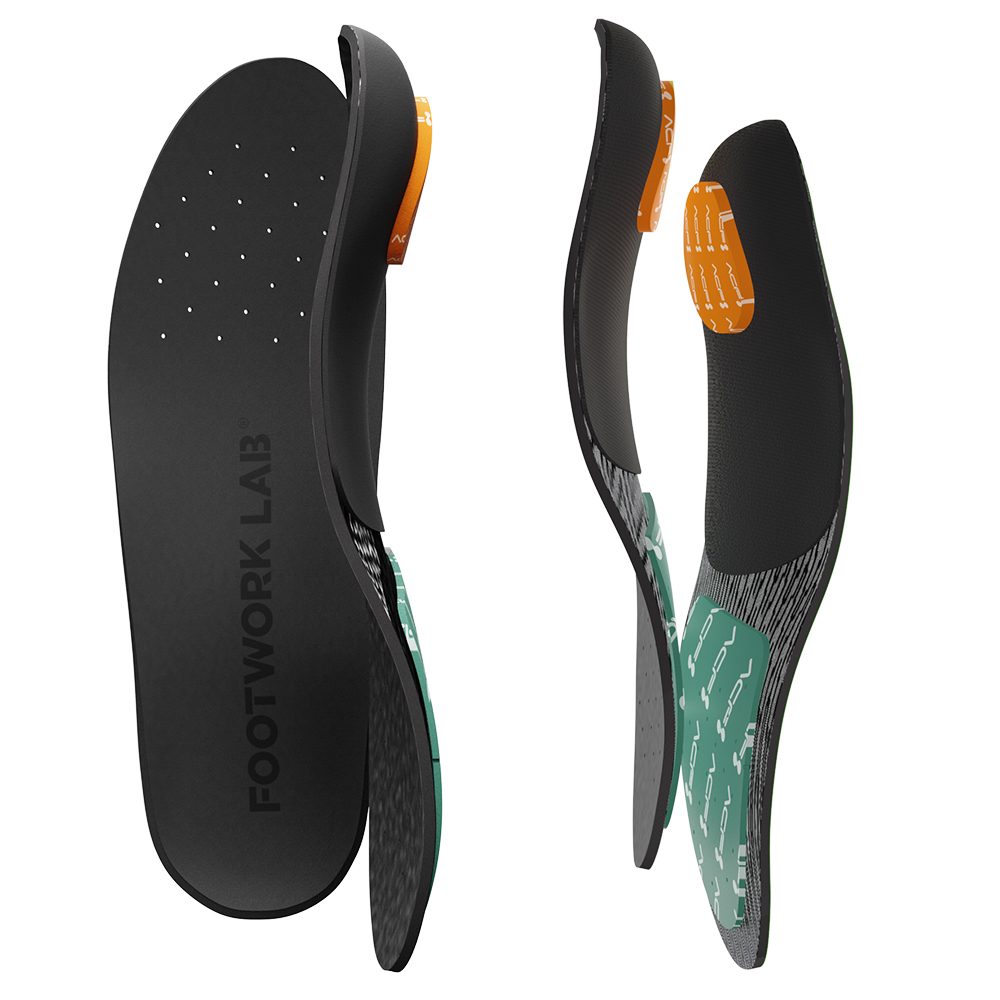
Most custom insoles are a stack: a structural layer that carries the shape, and a top cover that
provides the contact surface. The specification should state both, because the top cover changes
friction, appearance and how the insole leaves the factory. Buyers who intend to build a branded
range often specify the cover in some detail — colour, texture, printed marking — and it is worth
settling that before forming rather than after, since the cover is applied to the finished shape.
Forming: how a flat sheet becomes a shaped insole
The shape file and the material build are inputs. Forming is the step that turns them into a
three-dimensional object, and the method chosen affects how repeatable the product is and how
quickly a reorder can be produced.
There are broadly three approaches. Heat and vacuum forming uses a mould to pull a heated sheet
onto the shape; it suits higher volumes because the tooling is made once and reused. Direct
machining cuts the shape from a block, which suits prototypes and one-off or low-volume work because
no mould is needed. Additive methods build the shape up layer by layer, and are useful where the
geometry is complex or the run is very short. Each has a place, and the choice is usually driven by
volume, materials and the level of customisation required, rather than by one method being better
than the others.
Why the forming method belongs in the specification
If two batches of the same shape are formed in different ways, they will not be identical
products, even if the shape file never changed. That is the reason the forming method should be
recorded as part of the specification rather than decided batch by batch. It is also the reason a
reorder is faster and more reliable than a first order: once the shape is locked and the method is
set, the second run is a repeat, not a new project.
Prototyping before tooling
Where a new shape is being commissioned, the sensible sequence is to prototype first — often by
machining — and only then commit to the forming method for production. A prototype lets the buyer
check the profile and the build in the hand before any tooling is made. It also produces something
both sides can refer back to later, which is a quiet benefit when a reorder comes months after the
original order. Insole samples ship within three days, which keeps that early loop short.
What the buyer has to provide
Most specification problems trace back to an input the buyer did not supply. The factory can
produce faithfully from a clear brief; it cannot invent the missing parts. Four inputs do most of
the work, and a buyer who provides all four gets a faster and more accurate result.
- Foot data. A scanned contour, a cast, a tracing or an existing insole. State
which one, and state whether the shape is based on a loaded or unloaded position, because the two
produce different arch profiles. - The wearing scenario. What the insole is for — everyday footwear, a specific
sport, or a working shoe. This decides how much structure is appropriate and how much cushioning is
wanted. - The shoe type. The volume, the depth and whether the original sockliner can be
removed. This decides how thick the finished insole can be before it stops fitting. - Volume and pack. How many pairs, which sizes, and how they should be labelled
and packed. This is a commercial input, but it belongs in the same conversation because it affects
how the run is scheduled.
When those four are on the table, the specification conversation becomes concrete: the profile
is set against the foot data, the build is set against the scenario and the shoe, and the pack is
set against the order. A brief that answers all four can usually be turned into a sample quickly. A
brief that answers none of them produces a product nobody can assess until it has already been
made.
Reviewing and versioning a specification before production
Before a production run, the specification should exist as a document or a file that both sides
have seen and agreed, not as an understanding in a conversation. This is the step that protects the
buyer, because it is what a reorder is measured against.
Agree what the specification contains. At a minimum it should name the shape, the arch profile
condition it is based on, the materials and their relative thickness by zone, the top cover, and the
forming method. Ask what tolerance applies — how much variation between units is acceptable — since
no manufacturing process produces identical parts, and a supplier who cannot describe their
tolerance cannot promise consistency either. Then agree how changes are recorded. If a profile is
raised after a prototype, the version should change, and the changed file should be the one held for
the next order.
Custom insoles are available as ODM and OEM, and both change the specification conversation
slightly: under ODM the supplier contributes more of the design, while under OEM the buyer typically
brings the specification and the branding. Either way, the document is the part that survives a
change of contact person at either end of the relationship. We keep a per-customer after-sales group
that includes our engineer, which is one way to keep that history in one place, and our machines run
a seven-day test before dispatch on the principle that verification earlier is cheaper than
rework later. What we will not do is tell a customer what their feet need: we produce to the
specification that the professional assessment produces, and we leave the clinical judgement with
the professional.
Frequently asked questions
What does arch support describe in a custom insole?
In manufacturing terms it is the combination of four decisions: the arch profile, the material
build, the rearfoot build and the forefoot build. A complete specification records all four,
because changing any one of them produces a different product even when the label stays the same.
What do you need from us to define a specification?
Four inputs: foot data, the wearing scenario, the shoe type, and the order volume and pack. With
those, the profile, the material build and the packing can be set. Samples ship within three days
once a brief is clear.
Does it matter whether the foot data is captured loaded or unloaded?
Yes. The arch behaves differently when the foot is bearing weight, so the two captures produce
different profiles. The specification should state which condition the shape is based on.
Can the stiffness differ across the insole?
Yes. Custom insoles are built in zones, and a specification can call for a firmer heel and medial
area with more cushioning under the metatarsal region. Thickness and stiffness are related but not
the same, so both should be written down.
How is the insole formed into a three-dimensional shape?
The main approaches are heat and vacuum forming onto a mould, direct machining from a block, and
additive methods. The choice is usually driven by volume, material and the level of customisation
rather than by one method being superior.
Can you produce to a specification we already have?
Yes. If you have an existing insole, a shape file or a written brief, we can work from it. For a
new shape we would prototype first, so the profile and build can be checked before production
quantity is committed.
How do you keep a reorder consistent with the original?
By holding the agreed specification as the reference. If anything in the shape or build changes,
the version changes with it. A reorder is a repeat of a locked specification rather than a fresh
design.
What we would do next
If you are specifying an insole, write the brief around the four inputs before you ask for
anything: foot data, wearing scenario, shoe type, and volume. Then ask the supplier to show you the
arch profile before forming. Seeing the shape while it is still a file is the single most effective
way to catch a misunderstanding, because a profile is far easier to adjust on screen than after a
production run.
Ask, too, how the specification is recorded and what happens on a reorder. A supplier who can
describe their shape file, their material zones and their forming method in plain language is one
you can hold to a standard. Our insole range is listed on the
insole categories page, and the technical background behind how we
build shapes is set out under core technology. We have also written
about using a 3D foot scanner in the clinic to produce the measurements
that such a specification starts from. If you want a view on a brief, send it through the
contact page and we will tell you what is straightforward and what needs
more detail.
This article is intended for professional and educational reference. It is
not medical advice. Foot assessment equipment produces measurements and images; clinical
interpretation and any decision about care remain the responsibility of a qualified professional.
Certification scope is limited to the documentation we hold: European Union certification and ISO
quality system certification.