
At four in the morning the bakery is already warm, the first trays are already proving, and the baker has been on his feet since three-thirty. The floor is tiled, because tile scrubs clean, and it is hard in the way only a floor cleaned hourly can be hard. He is not walking anywhere — he is standing at the bench, leaning into a mass of dough, rocking slightly from foot to foot in the rhythm of the work. The ovens breathe heat at his back. By the time the shop opens and the first customers arrive, he has already done a full day’s standing, and the day has barely started.
For the professionals who advise workplaces — occupational health teams, physiotherapy practices, footwear retailers with a fitting service, insole workshops — the bakehouse is a distinctive case. The work mixes long static leaning with bursts of fast movement, on hard tile, in heat, in shoes chosen for safety rather than comfort, through a night that inverts everything the body expects. This piece looks at what a bakehouse shift does to feet, what to ask before building anything for a baker, what such a build has to cope with, and how to follow up once the pair is actually on the bench.
The shift that starts before the streetlights go off
Night-bake timing is the first variable to understand, because it changes the body that arrives at the bench. A baker starting at three or four in the morning is working against his own circadian floor: core temperature and alertness are at their lowest, muscles and joints are stiff from hours of sleep, and the first hour of work happens in a body that has not warmed up for anything. A daytime worker eases into standing across the morning; the baker drops straight into a full lean over a bench, in cold shoes, on a cold floor. The first walk of the morning always records differently, and the baker’s first hour is somebody else’s first walk taken to an extreme.
The shift then runs backwards from the rest of the world’s day. Breakfast service, the only public-facing part, arrives when the baker has already stood for hours; the quiet cleaning and prep that follow are done by a body that has been working since before dawn. By the time he feels the fatigue plainly, the shift is nearly over — which is exactly why the complaints arrive late and vague. Ask a baker how his feet feel and the honest answer is often “ask me at noon”, when he has been home long enough for the feet to report what the shift actually did.
There is a practical consequence for any assessment. A baker measured in the afternoon, rested, in comfortable shoes, is not the person who stands at the bench at four in the morning. The history has to reconstruct the working night in detail — start time, bench hours versus oven hours versus delivery hours, break pattern, footwear policy — because the record alone cannot see timing. What the professional builds for must be the four-in-the-morning version of this man, not the pleasant version who visited the clinic.
Tile floors, oven heat, and the bench lean
Three environmental constants define bakehouse load, and each one earns its own reading. The first is the tile. Bakeries choose hard tile because hygiene demands a floor that scrubs clean and sheds flour, and that choice is entirely correct and entirely uncompromising: nothing underfoot gives anything back. Unlike a workshop with rubber matting or a bar with an anti-fatigue mat, most bakehouses offer no compliant surface at all, from first bench to last clean-down. Every hour of standing happens against a surface that transmits load straight back up the leg.
The second is the heat. Ovens run all night, and the baker works in a gradient — hot at the oven end, cool at the door — crossing it dozens of times an hour. Feet swell in warmth, and a shoe fitted in a cool shop fits differently at hour three beside the oven. Heat also changes the foot inside the shoe: moisture builds, the skin softens, and the friction picture shifts toward the forefoot where the push-off happens. A baker’s complaints clustering at the ball of the foot are not a mystery; they are the predictable sum of hot floors, long standing and repeated oven crossings.
The third is the lean itself. Bench work is not standing; it is standing folded forward over dough, weight tipped onto the forefoot and the balls of both feet, shoulders doing the pressing, hips locked against the bench edge for leverage. Held for minutes at a time across a whole night, this posture parks load under the forefoot in a way that walking never does, and it does so on the hardest floor in the food trades. The measurement-versus-judgement rule applies as always: a pressure record can show where the lean parks load, but what that means for this baker’s feet is the professional’s interpretation, made with the full history of his nights.
What a bakehouse does to a working week of feet
Put the pieces together and the baker’s week has a recognisable shape. The nights are long — often the longest standing blocks in the food trades — and they are spent in that forward lean, on tile, in heat, in safety footwear. The days after are for sleep, which means the feet get recovery in bulk rather than in rhythm: one long night of load, then one long day off them, then again. Some bakers report that the second night of a run feels worse than the first, because the first night’s stiffness has not fully cleared before the second one starts.
The complaint pattern follows the workload. Forefoot aching under the bench lean, heel soreness from the hours of hard-tile standing between tasks, and a deep tiredness in the calves that the oven crossings deepen — these are the three answers a baker usually gives, and each maps cleanly onto a mechanism a professional can act on. What the baker rarely reports, and what the history should ask for, is the footwear: many bakehouses issue safety shoes or require non-slip clogs, worn for the whole shift, fitted for the average foot and reviewed never. A shoe chosen for dropped-pan protection and flour-spill grip is not chosen for the foot inside it.
This is also where the baker differs from the waiter or the shop assistant, whose standing is punctuated by walking. The baker’s standing is punctuated by working — pressing, folding, shaping — and the load is not merely carried but generated through the feet. Any recommendation that treats a bakehouse as “someone on hard floors” has already missed the point. The bench is a workstation, the oven is a heat source, and the tile is a surface that never forgives; a build has to be designed against all three, and assessed in the shoes the nights are actually worked in.
What to ask before building for a baker
Start with the shift arithmetic, because it dwarfs everything else. What time does the bake start, how many nights run consecutively, and how is the night divided between bench, oven, service and clean-down? A baker who owns the bench for six hours is a different case from one who rotates between bench and counter. Then the environment: floor material at the bench and at the oven, whether any matting exists and where, and how hot the oven zone actually gets by hour three.
Then the footwear, in detail. Are shoes issued or chosen, what protection do they carry, do they have a removable footbed with any depth, and — the question that catches most bakers — are they fitted for the feet of four in the morning, swollen, warm and damp, or for a cool fitting-room visit? Ask what he wears on the commute home and whether the same shoes survive both worlds. Then the open questions that let him narrate: where the feet end up by noon after a night, what he has already tried, what he does at the bench when it gets bad. Bakers’ improvised habits — one knee braced on the bench rail, weight hung on the bench edge, feet staggered one forward — are a free field study in where the load wants to go.
Close the interview with measurement, framed honestly. Static and walking records, taken at his own pace in the shoes he works in, show where load parks during the lean and how it travels during the crossings; the reading belongs to the professional, and the record’s job is to make the eventual recommendation defensible. If a pressure platform is available, a short standing capture in a leaned posture — the way he actually stands over dough — tells you more than any amount of tidy upright walking.
What the build has to cope with
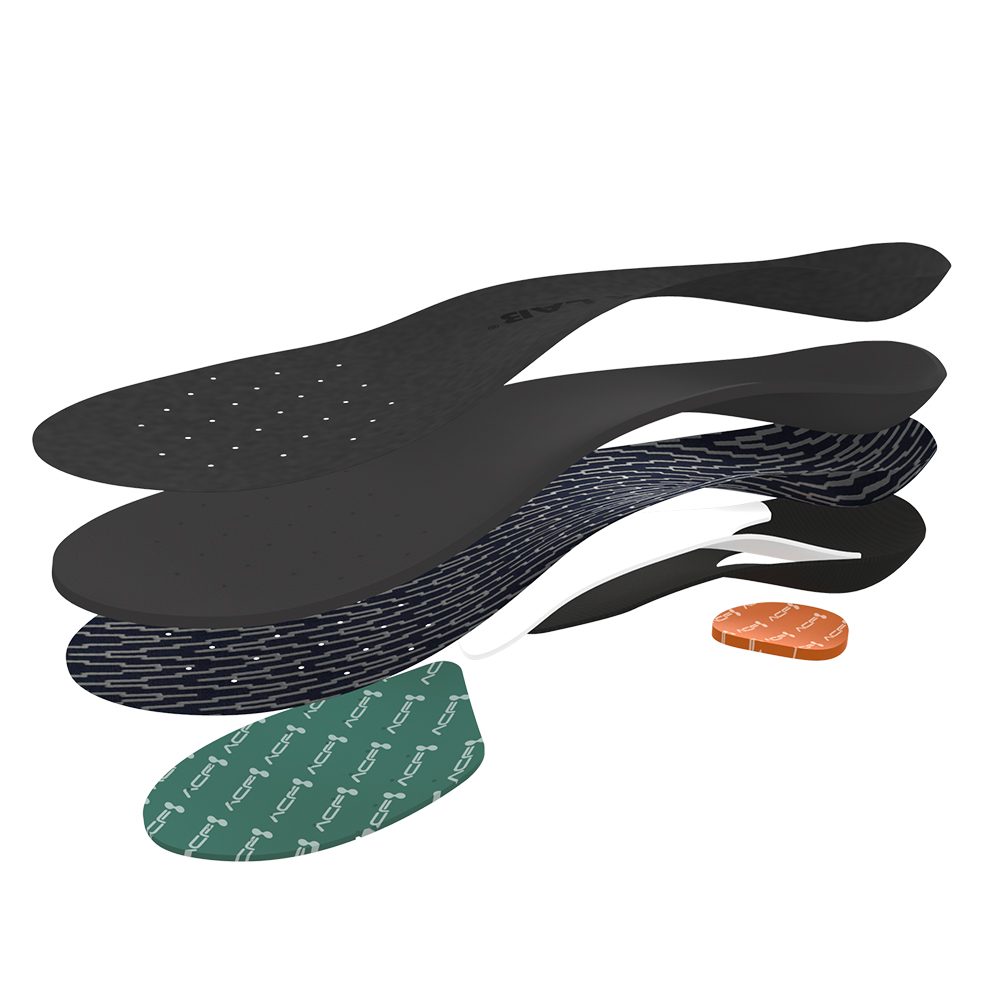
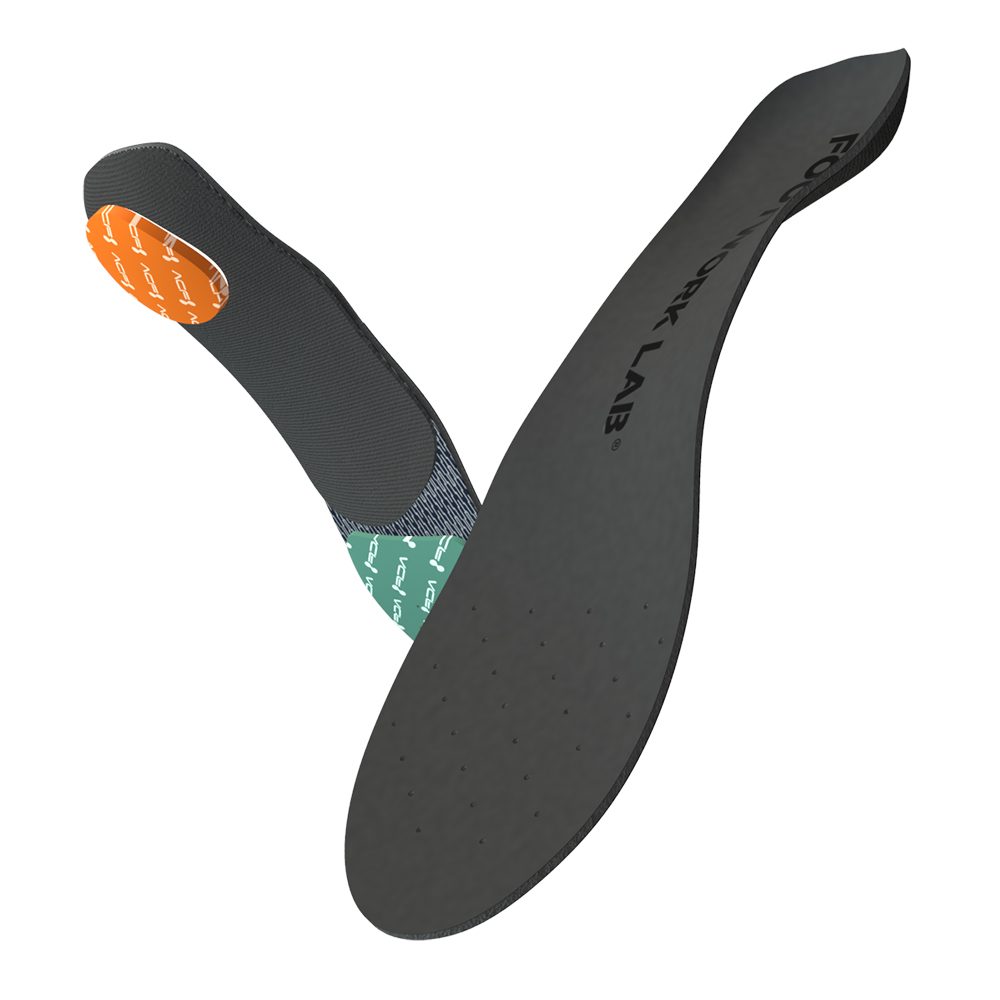
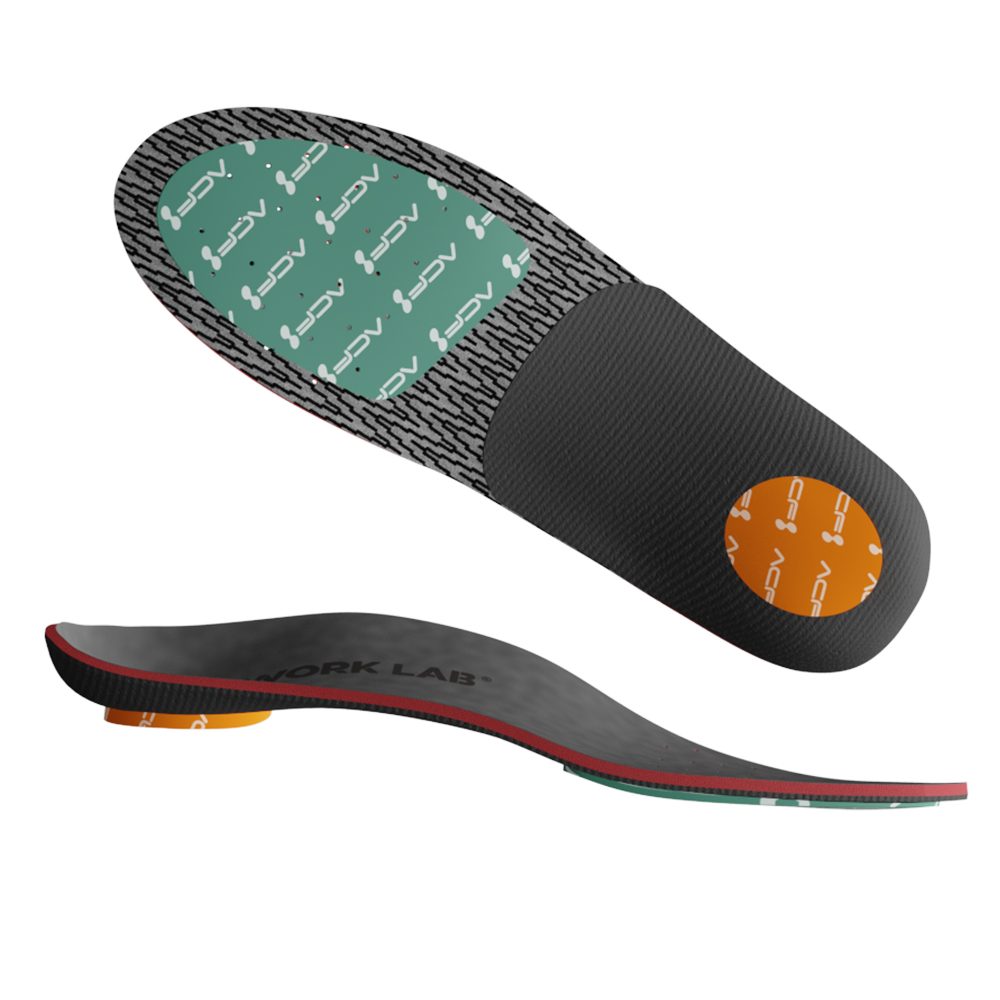
A bakehouse build is a standing-and-working build, not a walking build. Its first job is load distribution under the lean: shifting the parked forefoot plateau back toward the whole plantar surface, using the measured arch profile and the contours a proper build can address, so that six hours over the bench stop landing on the same two regions. The second job is cushioning the hard tile for the hours between tasks, when the baker stands upright waiting on proving times — a pair of custom orthotic insoles shaped to a measured standing pattern is one of the few interventions that manages both jobs while travelling with the baker rather than with the bakery. The goal is support and load distribution, stated plainly; nothing more dramatic, and anyone promising the tile floor becomes soft is selling something.
The third job is heat and moisture tolerance. A bakehouse interior is warm and humid for hours, and a build that deforms, packs down or turns slippery when damp will fail by mid-shift. Materials have to hold their shape through a full night’s warmth, and the surface must stay stable when feet are damp — which is why the build should be specified for the bakehouse climate, not the fitting-room climate. Ask the workshop what the construction does across temperature, and get the answer in writing on the build sheet.
The fourth job is surviving the shoe. Bakehouse footwear is protective, closed and short on volume, and a build that is technically excellent but makes the shoe tight will be out by the first proving wait. Check volume, toe-area thickness and where the foot sits in the shoe with the actual work shoe on the foot — the shoes he wore to the appointment tell you nothing about the shoes the nights are worked in. If the bakery issues footwear, build against the issued pair, or say plainly at the start that it cannot be done in that shoe.
Getting the pair worn through the bake
The fitting has to happen in working conditions as close as the clinic allows. Have him try the build in the exact work shoes, laced as he laces them, standing the way he stands at the bench — folded forward, weight forward, not at parade attention. Walk him through the first weeks honestly: a new pair changes how load sits under the foot, and there is an adjustment period during which short stretches beat full nights. The classic failure is one brutal first night followed by the pair retiring to a locker; a sentence at the fitting prevents it.
Deal with the timing problem directly. A baker’s follow-up cannot be scheduled at the end of a shift, because he is exhausted and the feet are in no state to report honestly. Schedule the review for his afternoon, and ask him to bring the worn pair plus the work shoes. Offer a habit anchor instead of a lecture: the build goes in when the work shoes go on, at the bakery door, every night. Anchored habits survive the pre-dawn fog; remembered intentions do not, and a habit that has to survive a three-thirty alarm needs to be automatic.
Set expectations with the same honesty you would want as a customer. What a build can realistically offer is better load distribution across a long night — felt, measurable in how the wear surface develops, and worth having. What it cannot do is cool the ovens, soften the tile, shorten the shift or fix a shoe that fights the foot. Saying that at the fitting is not underselling; it is what keeps the baker reporting back honestly at the review instead of disappearing with the failure story to the next bakehouse he works in.
After the first month at the bench
Book the review before he leaves, and hold it in the afternoon as agreed, because “come back if it hurts” filters out everyone who has adapted silently and everyone who has given up quietly. A month is long enough for the adjustment period to be over and short enough that the work shoes have not reshaped themselves around a bad fit. At the review, let the pair speak before he does, in this order.
First, the wear surface. Bakehouse wear has a signature: density under the forefoot from the bench lean, a band under the heel from the upright hours on tile. Wear that has packed down at a single spot means load never redistributed, and the build needs re-reading against a fresh measurement — not more reassurance. Second, the habits: is he still bracing a knee on the bench rail, still hanging off the bench edge? Habits that persist are data. Third, his own account, in his words — better, same, worse, or the most useful answer of all, “I stopped noticing my feet by hour four,” which is what success sounds like from behind a bench at four in the morning.
Then close the loop with the bakery, not just the foot. If the tile, the missing matting or the issued shoe is working against the build, say so to whoever manages the site, because the recommendation carries further when the professional names the environment as part of the problem. And log the case. A workshop that can show a year of bakehouse follow-ups — including the rebuilds — is a workshop that bakery group managers learn to call first rather than last, and night-shift retention is an argument owners understand.
Frequently asked questions
Why do bakers’ forefeet suffer more than their heels?
Because bench work is standing folded forward over dough: weight tipped onto the forefoot and the balls of both feet, held for minutes at a time across a whole night, on a hard tiled floor. Upright hours between proving times add a second plateau of load under the heels. Walking spreads load heel to forefoot with each stride; the bench lean parks it under the front of the foot.
Does oven heat really change how shoes and feet behave?
Yes. Bakeries run a heat gradient from the oven end to the door, and feet swell in warmth over hours. A shoe fitted in a cool shop fits differently at hour three beside the oven, and moisture inside the shoe changes the friction picture toward the forefoot. Any fitting should account for the warm, damp foot of a mid-shift baker, not the cool foot of a fitting-room visit.
What should we ask a baker before recommending insoles?
Shift arithmetic first: bake start time, consecutive nights, how the night divides between bench, oven, service and clean-down. Then environment and footwear: floor material, matting, issued or chosen shoes, removable footbed, fit for the swollen end-of-shift foot. Then open questions: where the feet end up by noon after a night, what he has tried, what he does at the bench when it gets bad.
Should the assessment capture the bench lean, not just walking?
Yes. A walking pass alone understates the problem, because the baker’s defining load is a static forward lean that generates force through the feet, not merely carries it. A short standing capture in the leaned posture he actually works in, plus walking passes in his work shoes at his own pace, gives the honest picture. Both are measurements; interpreting them is the professional’s judgement.
What does a bakehouse build need to survive?
Four demands: load distribution under the lean, cushioning for the hard tile during upright hours, tolerance of a warm and humid interior without deforming or packing down, and fit inside protective work shoes that are short on volume. A build that fails any one of these — usually the shoe-volume one — will be out by the first proving wait, so the shoe must be checked with the build inside it.
How long before a new pair feels normal on a night bake?
Most people need an adjustment period while load sits differently under the foot, and short stretches before full nights prevent the classic failure of one brutal opening shift followed by the pair living in a locker. By roughly a month the adjustment should be over, and the wear surface will show where the nights actually happened — which is why the review belongs in the diary at the fitting itself.
When should a pair built for bakery work be rebuilt or replaced?
At the month review, read the wear surface first. Bakehouse wear shows density under the forefoot from the lean and a heel band from the upright hours; wear packed down at a single spot means load never redistributed, and the build needs re-reading against a fresh measurement. Persistent habits — the knee braced on the rail, the weight hung on the bench edge — are further evidence that the build and the shoe need re-reading together.
What we would do next
If your service covers bakeries and other night-trades, take two things into your next fitting: a question sheet built from the interview above, with the bench lean written in as a named load case, and the habit of asking about the four-in-the-morning foot — swollen, warm, damp — rather than the fitting-room foot. Then add a leaned-standing capture to the assessment alongside the walking passes, because the baker’s day lives at the bench. The same principle — measure the task the worker actually performs — runs through other long-repetition trades too, and the closest cousin is the production line (Same Ten Steps, Ten Thousand Times: Insoles for Assembly Lines).
For workshop teams building at scale, bakery groups are a natural case: whole night crews can be measured and built for in production runs, and insole production capacity of roughly five hundred to a thousand pairs a day exists precisely so a group can outfit a staff rather than a staff member. If you run fits like these, here is the question we would put to you: when a baker reports at the month review that hour four is no longer the wall it was, do you log the credit to the build, the shoes, or the rota change that finally gave him shorter bench blocks? We ask because our own logging has never fully separated the three, and the honest answer changes how we follow up.
This article is intended for professional and educational reference. It is not medical advice. Foot assessment equipment produces measurements and images; clinical interpretation and any decision about care remain the responsibility of a qualified professional. Certification scope is limited to the documentation we hold: European Union certification and ISO quality system certification.