
The last job of the day ends the way most of them do: on both knees under a basin, in a kitchen that was never designed for a grown man to work in, with a headlamp strapped on and the shut-off valve just out of reach. By the time the engineer stands up, packs the tools and walks back to the van, he has knelt, crouched, climbed, stood on concrete and sat in a cab — usually before lunch. His boots have done their job. His feet have their own opinion about the day, and it is not the opinion anyone would predict from a step count, because the load in this trade is not measured in distance. It is measured in floor changes.
For the clinics, occupational health services and footwear professionals who see plumbers and heating engineers, this population presents one of the most varied load profiles in the working world: kneeling and crouching work, standing work on unforgiving floors, ladder and loft work, and driving between all of it. Everything below is about reading that profile honestly — what kneeling does and does not take off the feet, why the work boot is both container and constraint, what to ask before building anything, and how a pair that lives in work boots should be followed up.
A day made of floor changes
Most jobs have a floor. This trade has many, and it visits all of them before the day is out. A single call-out can include a paved front path, a kitchen tile floor, the carpeted landing upstairs, the loft boards, the plant room’s painted concrete, the pavement outside, and finally the ribbed rubber of the van’s cargo floor. Each surface asks something different of the feet, and none of them was chosen with the engineer’s comfort in mind — the choice belongs to the client’s building, the regulations, and the weather.
The transitions matter as much as the surfaces. Rising from a kneeling position loads the forefoot and toes sharply; stepping down from a loft ladder lands the heel; stepping off the van’s rear with tools in hand adds a loaded drop onto whatever the street offers. Multiply those transitions across a day of five, eight, twelve call-outs and the feet accumulate a load history that no single environment explains. That is why the complaint from this population often arrives as something diffuse — feet that are simply tired, everywhere, by evening — rather than the sharp, localised stories that single-surface jobs produce.
There is a practical action hidden in this observation, and it is the first thing to do with any tradesperson client: make them narrate a representative day as a list of surfaces and positions, in order, out loud. Van. Pavement. Kitchen. Under the basin. Up the stairs. Plant room. Loft. The list usually takes ninety seconds to deliver, and it converts “my feet hurt at work” into a structured sequence a professional can reason with. Ask for a bad day and an ordinary day, too — the difference between the two lists is often where the case actually lives.
Keep the list in the notes. Like the session-split habit we have recommended for athletes, the surface sequence becomes the reference every later comparison is made against: if the complaint changes after intervention, the sequence tells you which floor to suspect, and if it does not, the sequence tells you whether the intervention ever reached the floor that mattered.
What kneeling does, and what it does not take off the feet
The intuitive assumption is that kneeling is a rest for the feet — the load has moved to the knees, after all. The reality is more complicated, and the complication starts with how the tradesperson gets down and back up. Descending into a kneel under a basin usually passes through a crouch, and a deep crouch loads the forefoot and toes heavily while the heel lifts. Rising back out repeats it. A day of a dozen under-basin jobs means dozens of these crouch-and-rise cycles, each one a brief spike of forefoot load that no other part of the day provides.
While the kneel itself lasts, the feet are not idle either. They brace, stabilise and take partial load depending on the position — one knee down often leaves one foot planted and canted, taking the stabilising job for the whole torso. And the environment underneath is rarely kind: kitchen floors, bathroom floors and boiler cupboards are among the hardest surfaces in any building, and the kneeling pad, if one exists, protects the knee and does nothing for the bracing foot beside it.
The honest summary for the professional: kneeling removes some sustained standing load and replaces it with forefoot spikes, bracing load and hard-surface contact — a different problem, not the absence of one. This matters at the intake, because a client who says “I kneel most of the day, so my feet should be fine” and yet arrives with forefoot and toe complaints is describing a coherent story, not a contradiction. The forefoot is simply reporting the crouch cycles and the bracing.
It also matters for what gets built. A load profile dominated by spikes and bracing rewards different things than one dominated by long static plateaus: the forefoot region carries a job in this trade that it never carries for a shop worker, and any build should be read against the actual sequence of the day rather than against a generic idea of what a plumber’s day contains. The professional who has the surface list from the first section already has most of what they need to make that judgement.
The boot problem: safety footwear as container and constraint
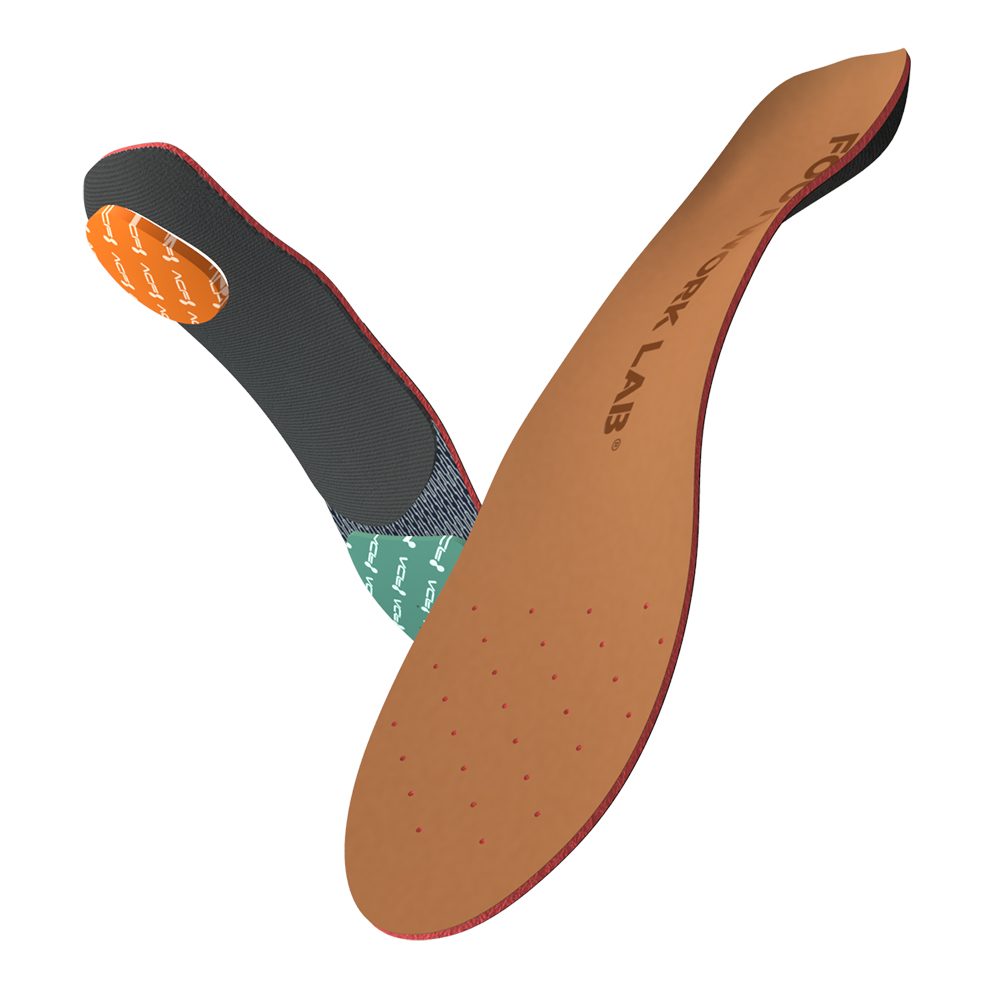
Everything a plumber wears on site is chosen mostly by other people’s rules and the weather. The work boot or safety trainer is heavy, stiff through the sole by design, protective at the toe, and frequently issued or mandated rather than chosen. It does real work — a dropped spanner ends badly without it — but its stiffness and weight change how the foot works all day, and its interior is often a flat factory footbed that treats every foot as the same shape.
The good news, and the realistic intervention point: most quality safety footwear has a removable footbed. That single fact defines what can be done for this population within the rules they work under. The boot stays; the interior changes. This is exactly the same logic we applied to laboratory and retail cases in earlier pieces — where policy or mandate fixes the shoe, the professional’s work happens inside it.
Three boot-specific checks are worth making every time, and they are quick. First, confirm the footbed is genuinely removable in the exact boots worn on site, and note their age: a boot whose midsole has flattened over years of site work presents a different case than a pair bought this season. Second, ask whether the client wears several pairs across the week — many tradespeople own work boots, a spare pair, and a pair for wet days — because a recommendation that lives in one pair fails quietly against a rotation. Third, ask about the van-to-site reality: some engineers change into lighter footwear for driving, some do not, and the answer affects what the build has to tolerate and where the hours actually accumulate.
One honest boundary belongs here too. We manufacture custom orthotic insoles and the assessment systems used alongside them, and we do not interpret records or promise outcomes — whether a particular boot-and-build combination is right for a particular person is the qualified professional’s judgement, made with the boots on the bench and the client’s day described in their own words. The equipment and the build are inputs to that judgement, not substitutes for it.
Standing load: plant rooms, reach work and the one-leg lean
Between the kneeling jobs, this trade stands, and the standing is worse than generic. Boiler rooms and plant rooms put the engineer on painted concrete for the length of a service or a diagnosis, often in a corner with poor light and no room to move. Central heating work in occupied homes means standing in one spot while a system runs through a cycle, watching a gauge or a fill loop, sometimes for long stretches with nothing to do but wait — and the waiting happens where the boiler is, not where the feet would prefer it to be.
The reach work adds its own signature. Working under a sink, behind a cistern, or inside a cupboard means standing bent, twisted, or balanced on one leg while the other takes a bracing position. The one-leg lean is the trade’s version of the bench rail habit we described for laboratory staff: an improvised load-routing decision the body makes without asking, repeated until it becomes automatic. Ask any engineer which leg they lean on when working under a basin and most will show you instantly, because the habit is well established even when the awareness is not.
Ladder and loft work extend the standing story upward. On ladder rungs, the forefoot takes sustained load on narrow rungs — a different contact pattern entirely from flat standing. In a loft, the engineer walks roof joists and crawls between them, on surfaces that flex and shift under load. None of this resembles the flat, predictable floors that most footwear and most generic footbeds were shaped around.
For the assessing professional, the useful move is the same one recommended for the lab case: record the baseline standing capture barefoot and relaxed, then ask the client to reproduce the working posture — the lean under the imaginary basin, the one-leg brace — and capture that as a second record, labelled for what it is. The difference between the two pictures is the working day, documented, and it gives whatever is recommended afterwards an honest reference rather than a polite one.
What to ask a heating engineer before you build
The intake for this trade can be short, provided the right questions are asked and the answers are written down. Four areas cover most of the ground, and the first two can be gathered before the appointment.
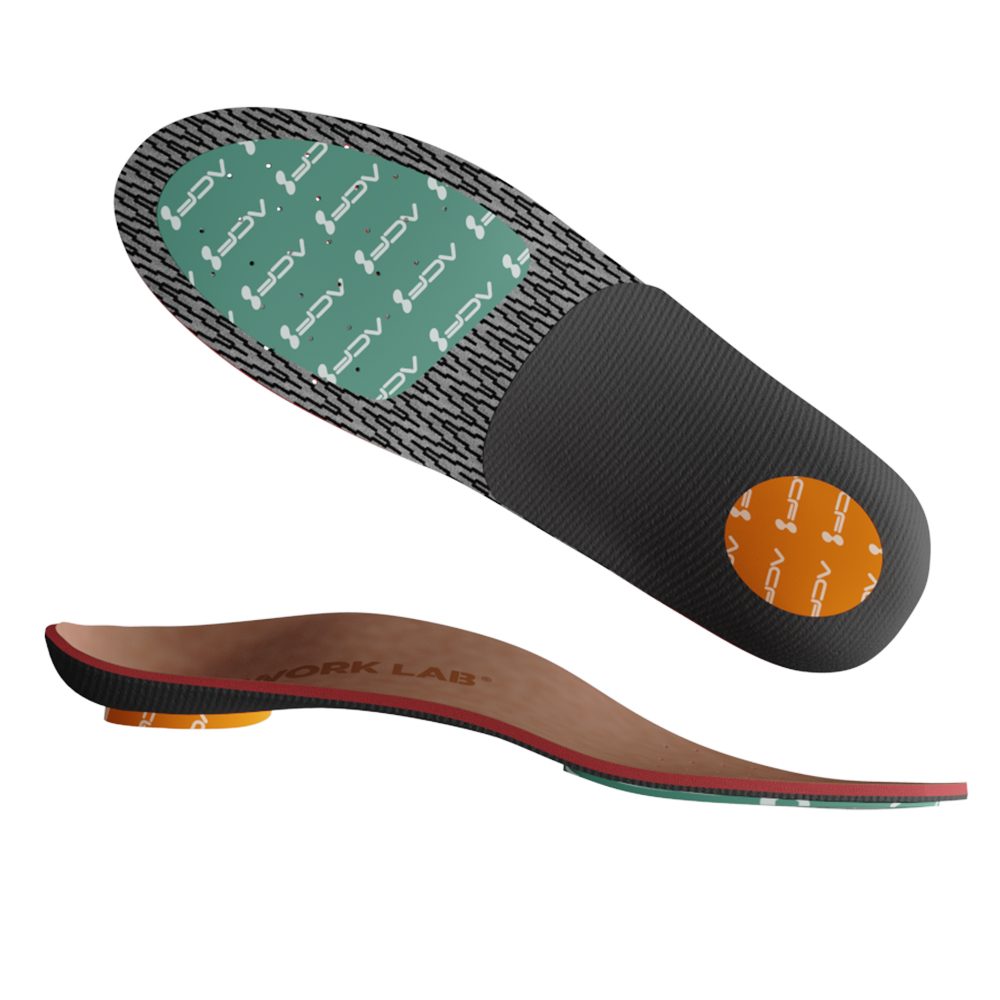
First, the day list: surfaces and positions in order, as described earlier, for an ordinary day and a bad one. Second, the boots: what site rules mandate, how many pairs rotate through the week, whether the footbed is removable, and how old the main pair is. Ask for the boots to come to the appointment, worn, not described — the interior depth, the stiffness through the sole, and the state of the factory footbed are facts the bench can verify and the client’s memory cannot.
Third, the position habits: which leg takes the lean under a basin, whether the client kneels right-knee or left-knee first, how the crouch-and-rise work distributes across the day. These habits are the asymmetries that will show up later, in wear and in complaint geography, and establishing them early turns the follow-up from a conversation into a comparison. Fourth, the complaint itself, timed: where it lands by end of day, whether it eases on the drive home or arrives at the front door, and whether it tracks the kneeling days or the standing days more closely.
That last question deserves a moment of attention, because it is the fork in the case. A complaint that tracks the standing hours points the professional at the plant-room profile; one that tracks the under-basin hours points at the forefoot story. The two lead to different conversations, and asking the client to place their complaint on one side of that fork — most can, immediately — is the single highest-value question in the intake. Write the answer down verbatim; the client’s own words at the first visit are what the review will be measured against.
The cab, the van floor and the hours nobody counts
Between the call-outs sits the part of the trade that no footwear professional ever sees: the driving. An engineer with a full diary can spend more time in the cab than under basins, and the cab is its own load environment with its own problems. The driving position flexes the ankle into a sustained position on the pedal, the seated posture takes weight off the feet in the way that sitting always does, and then every arrival undoes all of it at once — the engineer steps down from the cab, tools in hand, onto the pavement, and the feet take the whole day’s accumulated load again in a single movement.
The van floor deserves its own mention because tradespeople mention it first. Ribbed metal or rubber, never level, often wet, carrying everything the back of the van carries — every reach across the cargo floor is a small episode of awkward load that happens dozens of times a day while loading and unloading. It is the least glamorous surface in the trade’s list and, in several of the conversations behind this piece, the one engineers complain about most readily, precisely because nobody expects it to matter.
For the professional building the case, the driving hours change two things in practice. First, they belong in the day list: an intake that stops at the worksite understates the day, and the difference between a local diary and a long-distance one can be several hours of pedal time. Ask the client to estimate the driving share of an ordinary day alongside the kneeling and standing shares — the three buckets, like the session split we recommend for athletes, turn the day into numbers a professional can reason with instead of adjectives.
Second, the driving hours decide where the build travels. An engineer who swaps into lighter footwear for the motorway has a two-container case, and the question of whether one build serves both — or whether the driving pair gets its own advice — belongs at the fitting, not at the first review. An engineer who drives in the boots all day has one container and a simpler conversation. Either answer is workable; the unworkable version is discovering at the review that the hours you built for were only half the hours there were.
Following up on a pair that lives in work boots
Set the follow-up before the client leaves, roughly a month out, and warn them honestly about the adjustment period: load will sit differently under the foot while they adapt, and building up from shorter days to full weeks — rather than opening with the longest job list of the month — prevents the classic failure where one punishing day convinces the client the plan was wrong and the pair ends up in the van’s glovebox forever.
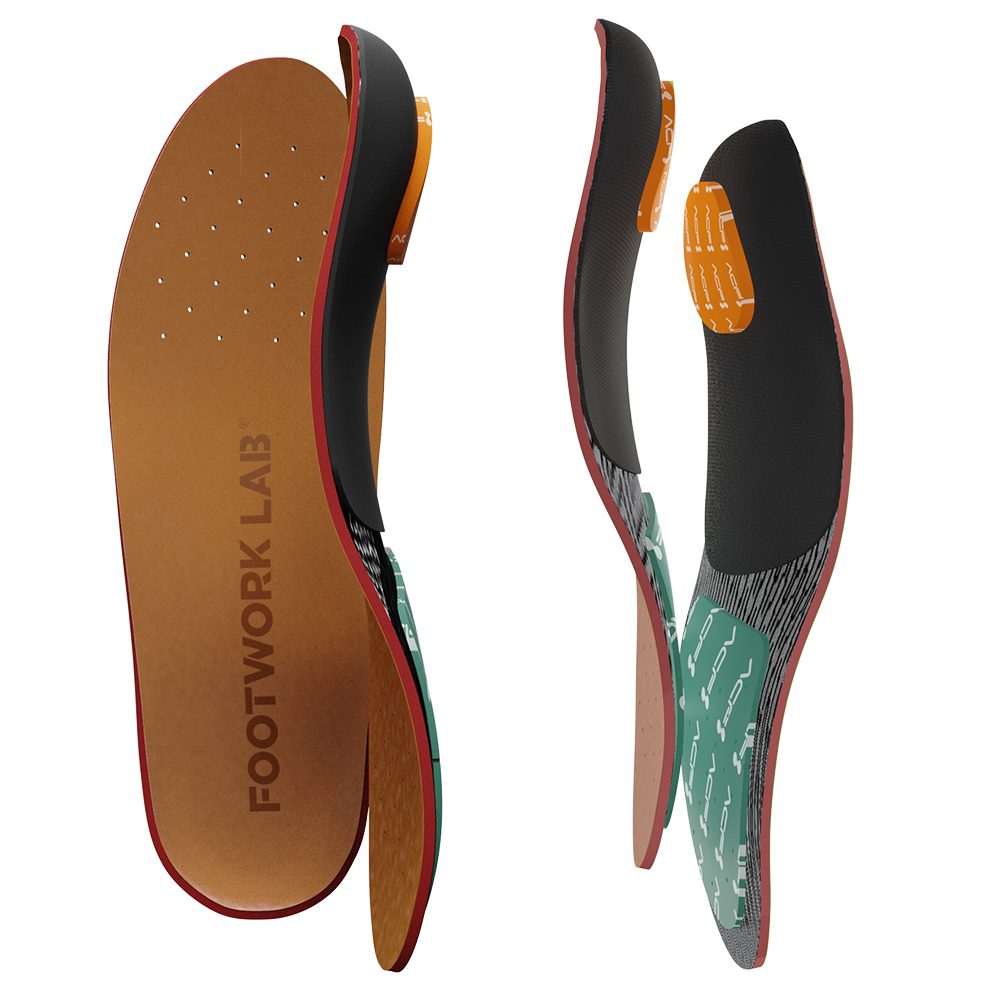
At the review, read the wear surface on the build first. Wear is the physical record of where the hours went, and in this trade the interesting questions are specific: does the wear mirror the documented lean habit, or has it balanced out? Is the forefoot region carrying the crouch-and-rise spikes the intake predicted? Wear that matches the working-day story says the build is living the job honestly; wear that does not says either the job changed or the build is not in the boot the job happens in — and both possibilities are worth saying out loud at the review rather than guessing at.
Pair the wear reading with a fresh run of the day list and the complaint timing, and compare against the first visit’s verbatim notes. If the complaint has moved — from the kneeling days to the standing days, or from one foot to both — that is progress to work with, not a setback: it means the first layer of the case was addressed and the next layer is now visible. If the complaint has not moved at all, the sequence tells you where to look before anyone rebuilds anything.
For workshops and distributors rather than individual professionals, the scale question eventually arrives: trade teams can be measured and built for in production runs, and our own plant’s capacity for custom orthotic insoles — around five hundred to a thousand pairs a day — exists so that a company can outfit its engineers rather than one engineer. Before any of that scale, though, the individual case has to be read properly, and the reading starts with a question most people never think to ask a tradesperson. So we will leave it with you, at the end.
Frequently asked questions
Why would a plumber need foot support if they kneel much of the day?
Because kneeling is a different load, not the absence of one. Getting down and up passes through a deep crouch that spikes load onto the forefoot and toes, the planted foot braces the whole torso while one knee is down, and the surfaces underneath are among the hardest in any building. The forefoot complaints this trade reports are a coherent story of crouch cycles and bracing, not a contradiction.
Can insoles be used inside safety boots?
Usually yes, because most quality safety footwear has a removable footbed — which is the realistic intervention point when site rules mandate the boot itself. The checks that matter: confirm the footbed is genuinely removable in the exact boots worn on site, note the boots’ age, and find out whether the client rotates between several pairs, because a recommendation that lives in one pair fails quietly against a rotation.
What should we ask a heating engineer before recommending anything?
Four things: a representative day listed as surfaces and positions in order, for an ordinary day and a bad one; the boots — rules, rotation, removable footbed, age, and the actual pair brought worn to the appointment; the position habits such as which leg takes the lean under a basin; and the complaint timed against the day — whether it tracks the kneeling hours or the standing hours. The last answer is the fork in the case.
Does the work boot itself cause the problems?
It contributes rather than causes. Safety boots are heavy and stiff by design and that changes how the foot works all day, and most carry a flat factory footbed that treats every foot as the same shape. But the boot also does necessary protective work, and where policy mandates it, the professional’s realistic surface is the interior — the removable footbed — rather than the boot.
Why capture a second record in the working posture instead of just standing relaxed?
Because the working day is not a relaxed stance. Reproducing the lean under the basin, the one-leg brace or the reach posture on the measuring surface documents how load actually distributes when the person is doing the job the way they do it five days a week. The difference between the relaxed baseline and the reproduced posture is the working day, and it gives any recommendation an honest reference to be reviewed against.
How long does a build take to feel normal in work boots?
Most people need an adjustment period while load sits differently under the foot, and building up from shorter days to full weeks avoids the single punishing job list that derails the plan. By roughly a month the adjustment should be over, which is why the follow-up belongs in the diary at the fitting itself, not somewhere the client is expected to remember.
When should a build for trade work be reviewed or rebuilt?
At the month review, read the wear surface first and ask whether it mirrors the documented habits — the lean, the forefoot spikes — or has gone elsewhere. Pair that with a fresh run of the day list and complaint timing against the first visit’s notes. A complaint that has moved from kneeling days to standing days is progress with a next layer visible; a complaint that has not moved tells you where to look before anything is rebuilt.
What we would do next
If an engineer lands in your schedule next week, start with the day list before anything else — surfaces and positions in order, ordinary day and bad one — and ask to see the boots worn rather than described. Those two habits cost minutes and prevent the most common mistake in this population, which is building for an imagined version of the job. For the neighbouring trades, our earlier pieces on garage mechanics on creepers and concrete and painters and decorators going up and down ladders cover load profiles that overlap this one at both ends.
We manufacture custom orthotic insoles and the assessment systems used alongside them, and we sort the categories by the load pattern of the job rather than the job title — the insole categories show that sorting. We do not interpret records and we do not promise outcomes; the judgement belongs to the qualified professional in the room.
And the question we promised, the one most people never think to ask a tradesperson: when you describe your working day to a professional, do they ever ask you to list your floors? Not your hours, not your distance — your floors, in order. We ask because the engineers who hear the question tend to answer it with a surprise: the floor that bothers them most is almost never the one they expected. If you work with this trade, we would like to hear which floor comes out on top in your clients’ lists, and whether it matched the complaint.
This article is intended for professional and educational reference. It is not medical advice. Foot assessment equipment produces measurements and images; clinical interpretation and any decision about care remain the responsibility of a qualified professional. Certification scope is limited to the documentation we hold: European Union certification and ISO quality system certification.