
The room has two ways to record a foot, the queue has six people in it, and the operator runs the customer through everything, out of habit. Stand on the plate, walk the track, stand again, walk again. Twenty minutes later the file holds four records, the customer holds a numb expression, and nobody in the room can say which of the records actually answers why the visit was booked. The next appointment is already waiting outside.
Most assessment rooms accumulate instruments faster than they accumulate decision rules. Each machine arrived for a reason, each still has a use, but the daily default — run everything, read what appears — costs time, muddies files, and makes explanations to customers harder, not easier. Working rooms do it differently: they start from the question the visit needs answered, and they match the record to the question. This article walks through what a static record can answer, what a dynamic record can answer, a decision order for the common visit types, and how to keep the choice consistent when more than one operator works the room.
The Room With More Than One Way to Record
Walk into a working foot assessment room and you will usually find more than one way to produce a record. A standing plate of some kind. A walking path. Sometimes a handheld or a mat that came with a starter kit years ago and never left. Every device in the room earned its place at some point, and none of them is the problem. The problem is the sequence: when the default routine is to run every instrument on every customer, the room has quietly decided that records are free and the customer’s time is too.
They are not. Each additional capture adds minutes to the appointment, adds pages to the file, and adds sentences that have to be explained or explained away. A customer who stood on one plate and walked a track and stood somewhere else leaves with a reasonable question — which one of those was the real result? — and the operator now owns three partially overlapping measurements instead of one clear answer. Files built this way are harder to compare across visits, too, because the next operator cannot always tell which record the first one actually relied on.
The fix is not selling a machine or buying one; it is writing down what each record is for. Rooms that make that list — even a single page pinned by the plate — report the same two changes: appointments get shorter, and conversations with customers get easier, because the operator can say in one sentence what was measured and why that measurement was the right one for today’s question. Everything else in this article is that one page, written out in full.
Start From the Question, Not the Machine
The working habit is embarrassingly simple: before the customer takes their shoes off, write down the question this visit needs answered. Not a diagnosis — a question. “What does this foot do when it is just standing at work?” “How does load travel when she walks at her own pace?” “Did anything change since the record we took in March?” A visit with a written question selects its own record, because each record type answers a particular kind of question and does it well.
Two practical rules make the habit stick. First, the question goes on the appointment note or the file header, in one sentence, before the capture — not after, and not improvised at the plate. An operator who cannot write the question in one sentence usually needs one more minute of conversation, not one more machine. Second, the default is one record per visit. Two records are a deliberate escalation, chosen because the question genuinely needs both, and the file should say why. Rooms that invert this — everything by default, justified occasionally — drift back into the habit this article started with within a season.
The discipline pays off most clearly with customers who arrive already worried. A question-first visit sounds different from the first minute: “you told us the front of the foot aches at work, so today we are looking at how you stand, and we will walk you at your own pace if the standing record raises a question we cannot answer that way.” The customer hears a plan instead of a procedure. That framing is also the honest one — the equipment produces measurements, the professional decides which measurement the question requires, and the interpretation belongs to the clinician, not to the plate.
What a Static Record Answers
A static capture — the customer standing still on the plate — answers questions about the foot at rest. The arch profile under load. How standing weight distributes across heel, midfoot, and forefoot. Whether the two feet behave like each other when the body is quiet. These are the fitting questions: if the visit exists to decide what kind of support a foot needs inside a shoe, or to establish a baseline for someone who will be monitored over time, a static record is usually the right tool, and often the only one the question needs.
Static records also suit conversations. The customer can see their own two footprints, the operator can point at regions without asking anyone to walk, and the explanation stays short: here is where your weight sits when you stand at the counter, here is the arch shape under load, here is how the two sides compare. For retail fittings, first visits, and standing-worker complaints — the teacher at the whiteboard, the pharmacist at the till — quiet stance is the condition the complaint actually lives in, which makes the static record not just adequate but the faithful one.
What a static record cannot do is show movement. It says nothing about how load travels through stance, nothing about timing, nothing about the gait cycle at any pace. Rooms get into trouble when they stretch a standing record over a walking question — “the arch looked low, so your walking must be…” — because the record simply does not carry that freight. When the visit’s written question contains a verb — walks, runs, stands for hours and then walks home — the record choice follows the verb.
What a Dynamic Record Answers
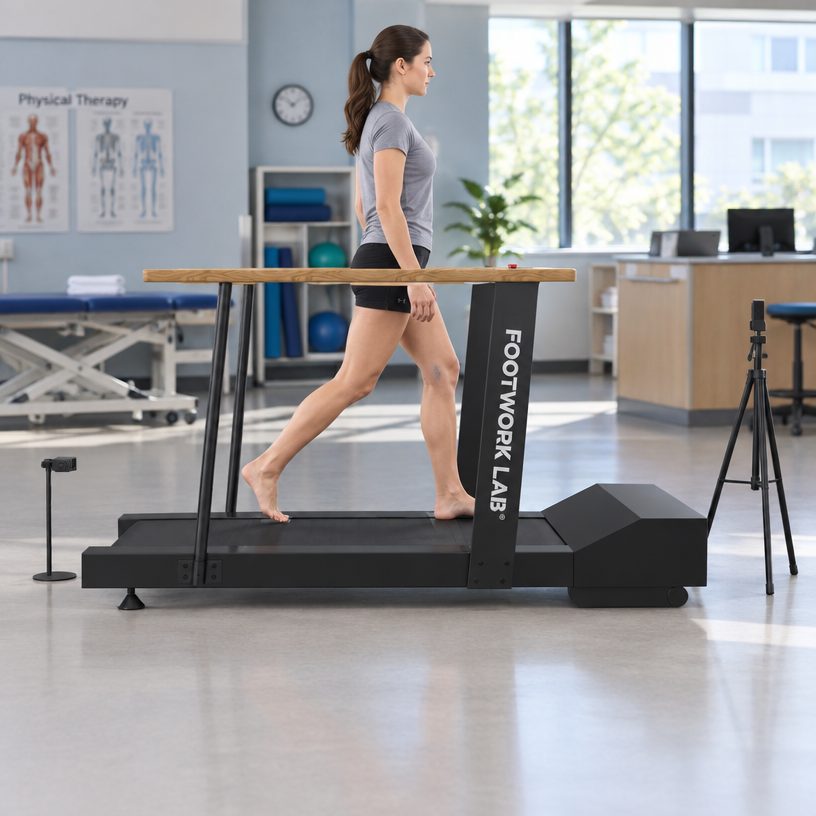
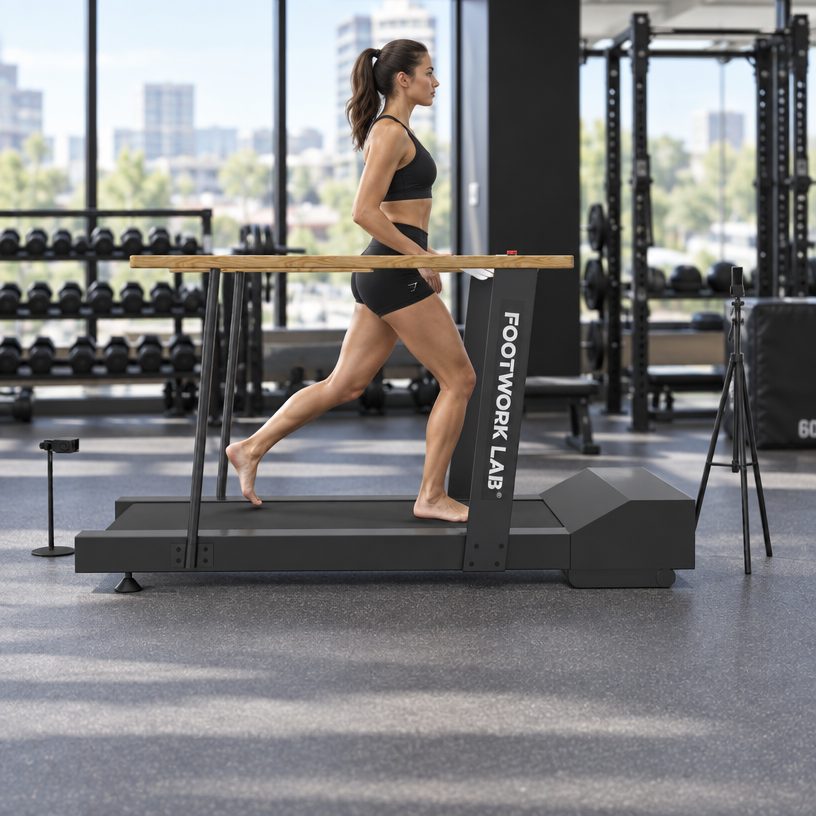
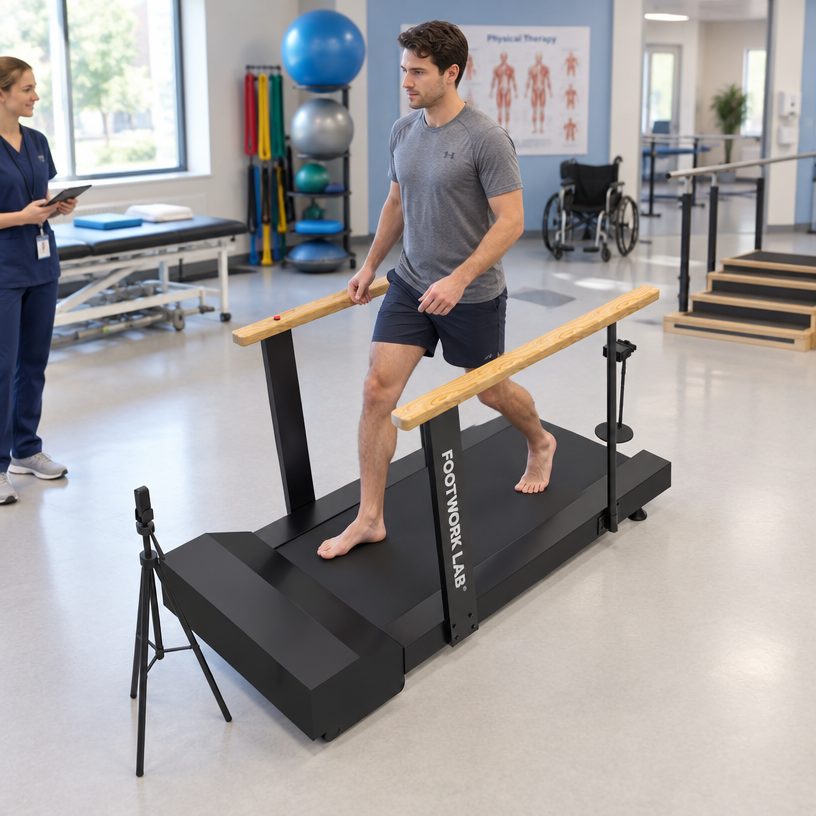
A dynamic capture follows the foot through movement, and it answers the questions standing cannot. How load travels through the gait cycle — heel strike through stance to push-off. Where the centre of pressure goes and how it gets there. Whether the force line behaves the same on both sides at the customer’s own pace. If the visit’s question is about a walk, a run, or a movement that only exists in motion, the dynamic record is the one that can speak to it, and a dynamic gait and running platform is the class of instrument built for exactly that conversation.
Dynamic records earn their extra minutes in three situations. First, the complaint arrives in motion: it appears when walking, disappears when seated, or shows up at a particular pace. Second, the standing record was already taken and raised a question that only movement can resolve — the file then says so, and the escalation is deliberate rather than habitual. Third, the customer’s activity genuinely lives at speed: runners, court-sport players, and hikers asking about descents all move in ways quiet stance never shows. In each case the moving record is not an extra; it is the answer.
Two cautions keep dynamic work honest. Pace belongs to the customer — a record captured at an operator’s instructed speed measures the instruction — and repeated trials matter more here than in static work, because moving bodies vary more than standing ones. And as always, the trace on the screen is a measurement, not a verdict: what the pattern means for this person’s training, footwear, or care is the professional’s call, made with the history and the examination in hand.
A Decision Order for the Common Visits
Put the two record types together and most visits sort themselves with a short decision order. If the question is about standing — fitting support, a standing job, a first baseline — start static and stop there unless the record raises a question it cannot answer. If the question is about movement — a walk, a run, a complaint that appears in motion — start dynamic, because starting static will only postpone it. If the customer reports a clear difference between standing and moving — fine at rest, uncomfortable by the walk to the bus — that is the one situation where both records, taken in the same session, genuinely earn their place, and the file should note that both were deliberate.
The order works because it forces the verb out of the customer’s story and onto the appointment note. A few minutes of conversation — when does it happen, at what point of the day, in which shoes — usually sorts the visit into one of the three rows above before anyone removes a shoe. Rooms that train new operators on this three-row table report that it becomes automatic surprisingly fast, and that the hardest habit to break is the operator’s, not the customer’s.
What the table does not do is replace judgment. Some customers cannot walk safely at the required pace; some questions are about footwear rather than feet; some visits are pure follow-ups where comparing like with like matters more than capturing anything new. The decision order is the default, and the professional overrides it with a reason written in the file — which is a different thing from overriding it out of habit, and the difference is visible to the next reader of the record.
When One Record Is Enough — and When Two Are Worth It
One record per visit is the working default, and the reasons are practical rather than philosophical. Appointment time is the scarcest resource in the room. Every added capture adds explanation load — the customer now needs to understand two measurements instead of one. And the file stays comparable: one record type per question means the next visit’s comparison is clean, while alternating record types across visits quietly destroys every trend line the room might otherwise read.
Two records in one session are worth their minutes in exactly the case described above: the customer’s own story says that standing and moving disagree, and the professional needs to see both conditions to work out which one the complaint belongs to. Even then, the pair works best when the static capture runs first — it is quick, it settles the customer, and it gives the walking trial a reference — and when the file records that the escalation was deliberate. A double capture explained in one sentence is a service; the same double capture unexplained is noise the next operator has to wade through.
The honest test is this: could the room answer the visit’s written question with one record? If yes, take one. If the answer is genuinely no — if the question spans both conditions — take both and say why. What kills files is not the number of records; it is records taken without a question, which then multiply across visits until the file describes the room’s habits instead of the customer. Fewer, better-aimed records are also kinder to the customer, who after all came for an answer, not for a tour of the equipment.
Keeping the Choice Consistent Across Operators and Visits
A decision order only works if every operator in the room applies it the same way, and that takes one page of protocol rather than good intentions. The page carries the three rows — standing question, moving question, both conditions — plus the house rules: the question goes on the appointment note first, the default is one record, two records need a written reason, and pace always belongs to the customer. New staff learn the page before they learn the machines, which reverses the usual training order and produces operators who can explain the room instead of merely operating it.
The second consistency rule concerns re-tests: like compares with like. If the baseline was a static record, the follow-up that tracks change is also a static record, under the same conditions, unless the question itself has changed — and a changed question is written down as a change, not slipped into a routine. Rooms that mix record types across visits find their comparisons quietly rotting; rooms that keep the line straight can show a customer two records from two dates and say exactly what differs, which is among the most convincing conversations the room can host.
Consistency also has a customer-facing face. When a customer returns and the new operator asks the same first questions, reads the same written question from the file, and captures the same record type, the customer experiences a room that knows what it is doing. That experience — not the equipment list — is what they describe to the next person who asks where to go. The protocol page is, in the end, the room’s reputation made reproducible.
Frequently asked questions
Do I need both a static and a dynamic record for every customer?
No. The working default is one record per visit, chosen by the question the appointment needs answered. Both records together are worth their minutes when the customer’s own story says standing and moving disagree, and the file should note that the escalation was deliberate rather than habitual.
Which record should I use when a customer only wants support for standing work?
Start static. A standing job is a standing question, and quiet stance is the condition the complaint actually lives in. Escalate to a walking capture only if the static record raises a question it cannot answer — and write down why the escalation happened.
Does a dynamic capture take longer to run and explain?
Generally yes, and the difference is mostly explanation rather than operation: the moving record shows more behaviour, which invites more conversation. Budgeting for that conversation is part of choosing the record; a dynamic capture rushed through to protect the schedule measures the schedule, not the customer.
Can records from different systems be compared across visits?
Comparisons are most trustworthy within the same record type, taken under the same conditions, by a room that writes its conditions down. Different instruments and different capture conditions describe different situations, so the practical rule is like with like — and a changed method is recorded as a change, not buried.
How do I explain to a customer why only one record is needed?
State the question and the match: today we are answering how you stand at work, and the standing record answers that. Customers accept a plan far more readily than a procedure, and the one-sentence framing — which measurement, which question — is also the habit that keeps the room’s files clean.
What should be kept consistent when re-testing a customer?
The record type, the conditions, and the written question. If the baseline was a static capture, the follow-up is a static capture under the same conditions, unless the question itself has changed — in which case the change belongs in the file as a decision, not in the routine as a drift.
When is a second record worth the appointment time?
When the visit’s written question genuinely spans both conditions — the customer is fine at rest and uncomfortable in motion, or the standing record raised a question only movement can resolve. Even then, take the static first as the quick reference, and note in the file that both captures were deliberate.
What we would do next
Here is the exercise we give partner rooms: take your last twenty appointment files and mark, for each, the written question and the record type that answered it. Most rooms find files where the record answers a question nobody wrote down, and a few where the file holds records nobody relied on. That audit costs an hour and usually writes next quarter’s protocol page by itself. The three-row decision order in this article — standing question, moving question, both conditions — is a starting draft, and rooms rewrite it to fit their own instruments within a fortnight.
We build both categories of instrument at the Ruichang factory — the record that answers a standing question and the dynamic platform that answers a moving one — and every unit leaves after seven days of factory testing, with a dedicated WhatsApp support group and remote assistance behind it. But the honest position, and the one this article has argued, is that the decision order matters more than the instrument list: a room with one plate and a clear protocol outperforms a room with four machines and a habit. For related reading, start with What the First Footprint Promises, and What It Does Not, then The Appointment That Ends With No Pair for the discipline of stopping at the right record, and Let Them Pick the Pace for the rule the dynamic capture depends on.
The question for the comments: in your room, who decides which record a visit gets — the operator at the plate, the clinician before it, or the habit of the last ten appointments? And has anyone actually written the rule down? We ask because the rooms that answer the second question with a yes are, without exception in our experience, the ones whose files we would trust sight unseen.
This article is intended for professional and educational reference. It is not medical advice. Foot assessment equipment produces measurements and images; clinical interpretation and any decision about care remain the responsibility of a qualified professional. Certification scope is limited to the documentation we hold: European Union certification and ISO quality system certification.