
A walkway gait assessment platform is bought to answer a narrow question:
what does this person’s walking actually look like, recorded in a way that can be measured again
later. Units that go looking for a gait training machine for walking rehabilitation often
discover that the more useful first step is a reliable, repeatable measurement of walking — before
anyone decides what to do about it. That is a different purchase from a treadmill, and it changes the
questions you should ask about space, schedule and staffing.
This article is about how a walkway-style platform fits into a working rehabilitation or
physiotherapy unit: where it goes, how long an assessment takes, who reads the output, and how the
same set of records supports a comparison between one visit and the next. FOOTWORK LAB has
manufactured foot assessment equipment since 2014 and runs its own plant in Ruichang, Jiangxi
Province. We build the measurement side of this workflow, and we are careful about the boundary:
equipment records data, and clinical judgement stays with the professionals who use it.
What a walkway platform records — and what stays with the clinician
A walkway platform records a person walking across a defined surface. Depending on the
configuration, the record can describe several things at once, and it is worth being precise about
what each of them is, because the vocabulary is where a lot of confusion starts.
- Gait cycle timing — the sequence of stance and swing, and how the timing of each
phase relates to the other side of the body. - Plantar pressure — how load is distributed under each foot as the person walks,
rather than while standing still. - Centre of pressure path — the route the pressure centre takes through the foot
during a step, which is a measurement of movement, not an interpretation of it. - Left-right comparison — the two sides recorded under the same conditions, so the
difference between them can be looked at directly.
What the equipment does not do is decide what any of that means. It is not a diagnosis. It
produces measurements and images with a time axis, and the reading of them — deciding whether a
pattern is expected, whether it matters, and what should follow — is a professional judgement made by
a person who knows the case. Any product description that implies the platform itself delivers a
conclusion is describing something the hardware cannot do.
This is more than a compliance point. It changes how the unit plans the purchase. If you buy a
measuring instrument expecting a decision-maker, the tool will sit unused, because nobody on the team
has been given a reason to look at the output twice. The installations that work are the ones where a
named clinician wants the record and has a routine for reviewing it.
The same boundary applies to the words on the report. We describe what was measured and when. We
do not describe a change in walking, because that is a claim about a person rather than about a
recording, and it belongs to the clinician, not to us.
Space and floor: where a walkway actually fits
The planning error we see most often is measuring the footprint of the platform instead of the
footprint of the task. The platform is only the middle of the run; a person has to approach it at
walking speed and keep walking after it.
Length of the run, not the length of the mat
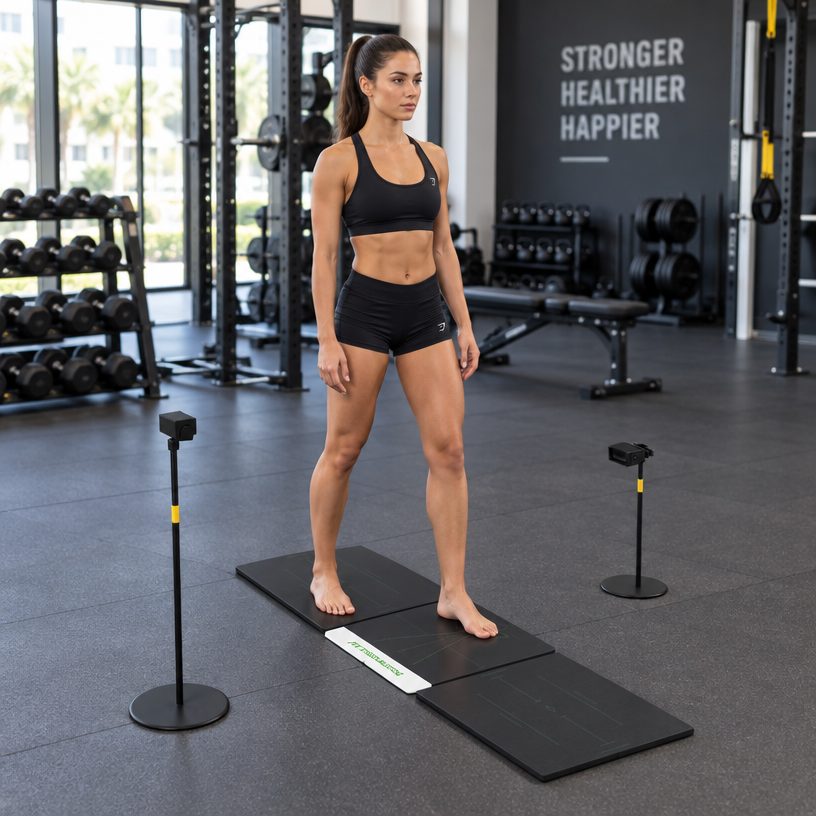
An assessment needs a clear walking path with room to accelerate before the recording surface and
room to keep walking afterwards. In practice the constraint is usually the longest unobstructed
straight line in the room, not the equipment itself. It is worth walking that line before purchase,
at normal walking pace, and checking that nothing has to be moved out of the way each time.
Floor and access
The route needs to be level and predictable. Thresholds, ramps, loose mats and changes in floor
covering all show up in pressure and timing data, so the assessment route should avoid them. If the
recording surface sits on top of the existing floor, the transition at each end should be flush enough
that nobody adjusts their step to cross it.
Guarding and clearance alongside
Some people who come through a rehabilitation unit need a hand near them, a rail, or a walking aid.
That means the run needs working clearance along at least one side, and a clear sightline for whoever
is watching the walk. Cables, foot switches and power leads should be routed so they never cross the
walking line — this is a clinical risk point rather than a technical one, and it should be settled
before the platform is installed, not after.
A route that can be repeated
Finally, the route has to be the same route next month. If the walkway ends up in a corridor that
is sometimes used for equipment storage, the second assessment will not be comparable with the first.
A dedicated position in an assessment room, even a small one, is worth more than a longer run in shared
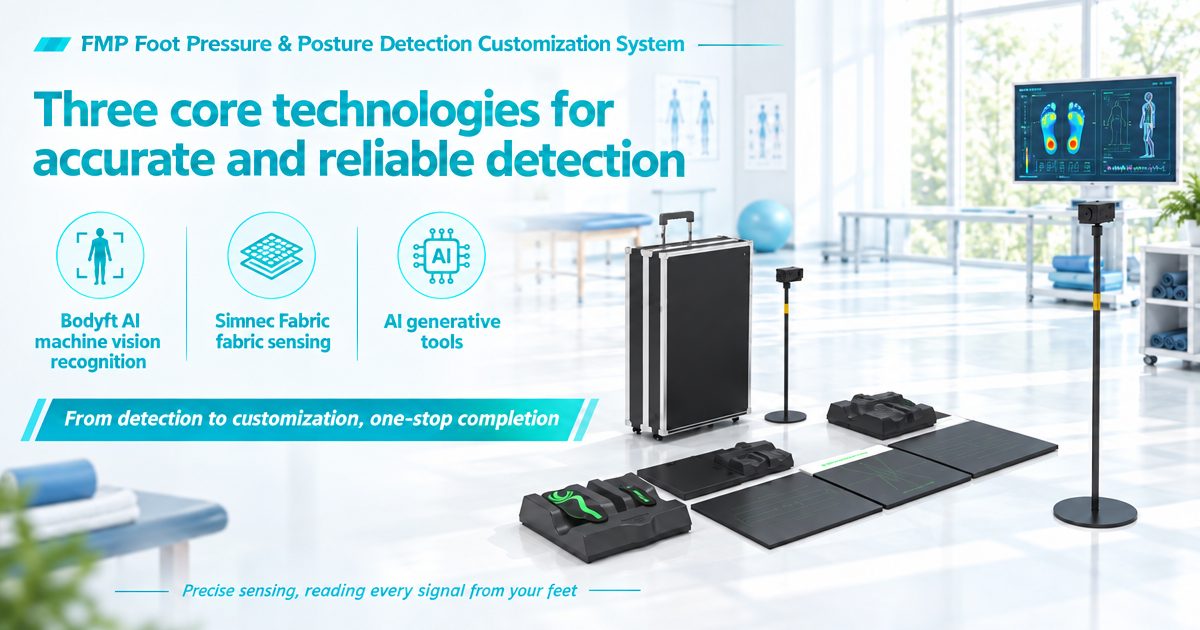
space, because a repeatable measurement depends on a repeatable setup. Our
walkway and running platform is built to be set up as a
defined assessment station rather than a temporary one.
Fitting assessment into the working day
Once the platform has a home, the next question is how it fits the schedule. The answer decides
whether it is used weekly or abandoned after the first month.
How long an assessment takes
A standard walking assessment is a short appointment: explanation and consent, footwear and
preparation, a few walking passes, a brief rest if needed, and a check that the recording is usable.
In most units this sits comfortably inside a normal appointment slot, which matters because it means
the platform does not need its own day in the calendar. It slots into a slot that already exists.
When to book it
Timing affects the record. A walk recorded immediately after a demanding session looks different
from one recorded at the start of a visit, and both are legitimate — what matters is consistency. If
the unit records at the start of each visit, it should record at the start of each visit every time.
Same time in the day, same footwear, same walking speed on the same route: these are not clinical
decisions, they are housekeeping that makes the measurements comparable.
How many people are needed
One trained operator is usually enough for a routine walk. A second person is useful when someone
needs guarding or assistance, and in those cases the person assisting is part of the assessment rather
than a spectator. It helps to name the operator in advance rather than assuming whoever is free will
run it; inconsistent technique between staff is one of the quiet reasons data sets drift.
The unglamorous parts
Between patients, the walking surface is cleaned and the route is cleared. Walking aids, footwear
and any prosthetics the unit supports need a place to sit outside the walking line. And the operator
needs a moment to check the recording before the next person arrives, because a walk that was
interrupted or hurried is worth repeating then and there rather than discovering the gap at the
review meeting.
Who reads the data, and how it moves through the team
Measurement only creates value if someone looks at it. The practical arrangement in most units has
three parts, and it is worth deciding them explicitly rather than leaving them to habit.
Who captures
The person who runs the software and records the walk is usually a physiotherapist or a trained
assistant. Their responsibility is the quality of the recording: was the route used correctly, was the
walk representative, is the record complete and saved under the right identifier.
Who interprets
The clinical reading of the record sits with the professional responsible for the case — commonly a
physiotherapist or a rehabilitation physician, depending on how the unit is organised. This is where
the assessment connects to everything else about the person, including history and examination that
the platform knows nothing about. The equipment contributes measurements; the interpretation is theirs
and stays theirs.
How it is shared
Two outputs tend to be useful. One is the full record, attached to the patient’s file so that it
exists as a dated measurement rather than a memory. The other is a short summary that a colleague can
read in a team meeting, or that can be shown to the person and their family as a picture of how they
walked on a given day. Reports that can be produced in a standard format are more likely to be filed
consistently than reports that have to be rebuilt each time.
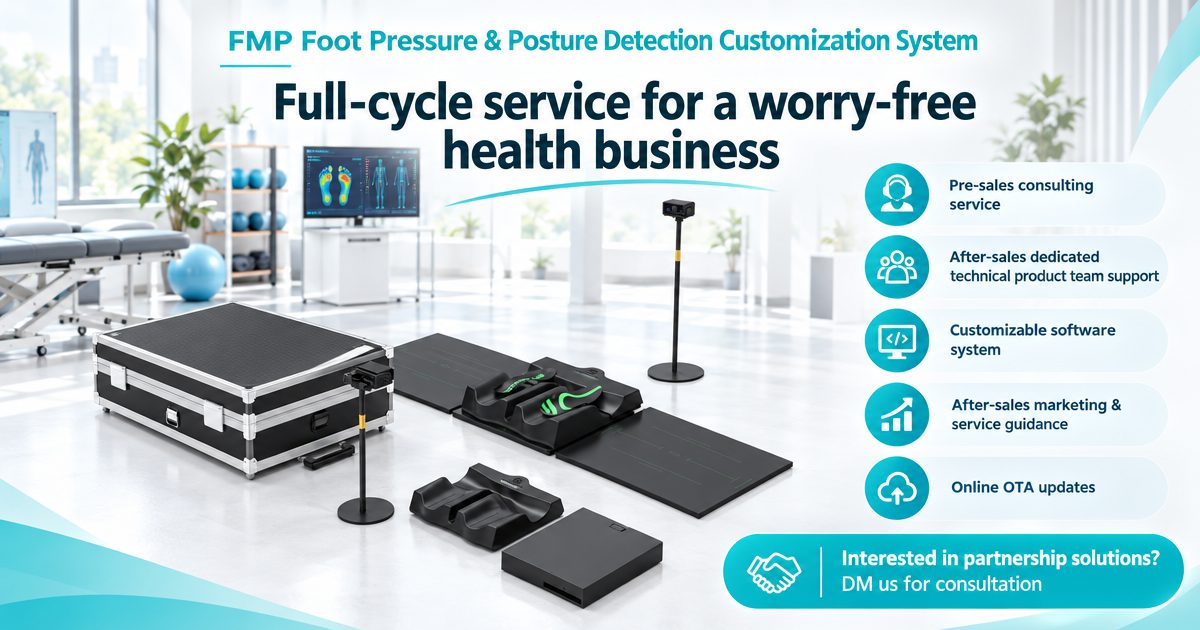
Where the platform is networked, records can be exported and stored alongside the rest of the
unit’s data. Our machines include remote-assistance and update functionality, and where the device is
connected to the internet we can push software updates when a new version is released — useful in a
setting where nobody wants to think about the software at all. We do not, however, tell a unit what
its reporting routine should be. That depends on how the clinic works, not on the hardware.
Using the same record set for a before-and-after comparison
The reason to keep a baseline is simple: a single recording describes one day, and most of the
questions a team actually asks are comparative. Did this look the same as last time, or different?
Recording a baseline
The first assessment is the reference. It should be saved in the same format and under the same
identifier as every later one, and the conditions should be written down alongside it — route, footwear,
walking aid if used, and the point in the visit at which the walk was recorded. Without those notes,
a later comparison is comparing two different procedures rather than two moments in time.
Repeat visits
Follow-up assessments are most useful when they repeat the same setup as closely as the setting
allows. Same route, same speed asked for, same instructions, comparable time of day. When something
has to change — a different walking aid, a different shoe — the change should be recorded with the
measurement, because otherwise it will be read as a difference in the person.
What a comparison can and cannot say
A side-by-side view can show a clinician that the pattern recorded today is similar to or different
from the pattern recorded at the baseline, and it can point to where the difference sits: timing,
pressure distribution, or the path the pressure takes through the foot. What it cannot do is declare
whether that difference matters, or whether it is a good sign. That reading depends on the person, the
context and the professional judgement of the clinician, which is exactly where it should stay. We
describe these as progress records — dated measurements of walking — rather than as evidence of
anything on their own.
Keeping it tidy
The practical discipline is unglamorous: keep the baseline, never overwrite it, name files the same
way every time, and store the image set with the numeric record. Units that do this find the
comparison is available in seconds; units that do not end up repeating the baseline to have something
to compare against.
Practical questions before you commit to a platform
If the workflow above sounds like your unit, the purchase conversation becomes easier, because the
requirements are concrete rather than aspirational.
Four things to settle first
Do a walk-through of the intended route and confirm the clear length and access. Name the person
who will run the assessments and the person who will read them. Decide what the output has to connect
to — a paper file, a shared folder, or an existing records system. And estimate how often the platform
will realistically be used, because a capacity plan based on daily use when the unit will record
weekly is a good way to over-specify.
Service and delivery, in plain terms
Machines carry a twelve-month warranty covering non-human-caused failures, with free parts during
that period, and every unit goes through a seven-day test cycle before dispatch. The machines use a
modular structure and include remote-control functionality, so with your consent many issues can be
identified from video and photographs or through remote access, and parts can be replaced individually.
Each customer also has an after-sales group that includes our engineer, so the unit, the sales contact
and the technician are in the same conversation. The minimum order for a machine is one unit, and we
accept ODM for machines.
What we will not tell you
We will not tell you that the platform changes how anyone walks, and we will not quote a figure for
price before the configuration is defined — price in this category is a consequence of what the
platform has to do, not a number that stands on its own. As for certification, our position is
deliberately narrow: our products hold European Union certification and ISO quality system
certification, and we state that as the scope rather than implying anything broader.
Ask for a demonstration
Where a demonstration unit or a guided video walkthrough is available, take it and run an
assessment on one of your own team. Walking the route yourself reveals more about how the platform
will sit in your room than any floor plan. Our equipment-related service options are described under
professional services.
Frequently asked questions
Is a walkway gait platform a diagnostic instrument?
No. It is a measuring instrument. It records walking — gait cycle timing, plantar pressure, the
centre of pressure path and left-right comparisons — and produces measurements and images. Reading
those measurements and deciding what they mean is a clinical judgement made by a qualified
professional.
How much floor space does a walkway assessment need?
The requirement is a clear straight walking run with room to approach at normal walking pace and to
continue walking after the recording surface, plus working clearance along one side for whoever is
watching or assisting. The longest unobstructed straight line in the room is usually the limiting
factor, so it is worth walking the intended route before deciding on placement.
How long does one assessment take?
A standard walking assessment fits inside an ordinary appointment slot: explanation, preparation,
a few walking passes, a short rest if needed, and time to confirm the recording is usable. Because it
does not need a dedicated session, the platform can be scheduled alongside other work rather than
blocking an assessment room for half a day.
Who should be trained to run the machine?
Usually a physiotherapist or a trained assistant runs the capture, and the clinical reading sits
with the professional responsible for the case. Naming both people in advance matters more than it
sounds: inconsistent technique between operators is one of the common reasons measurements drift
between visits.
Can we compare a current assessment with one from six months ago?
Yes, if the setup is consistent. Keep the baseline record, name files the same way each time, and
note the conditions of the walk — route, footwear, walking aid and the point in the visit. A
side-by-side view can show the clinician whether the recorded pattern is similar to or different from
the baseline; whether that difference matters remains a clinical judgement.
How is the platform maintained and supported?
Every unit goes through a seven-day test cycle before dispatch, and machines carry a twelve-month
warranty covering non-human-caused failures with free parts during that period. The machines are
modular, so parts can be replaced individually, and the software includes remote-control
functionality: with your consent, many issues can be resolved from video, photographs or remote
access. Each customer has an after-sales group that includes our engineer, and where the machine is
connected to the internet, software updates can be pushed when a new version is released.
What is the minimum order, and do you offer ODM?
The minimum order for a machine is one unit, so a unit can start with a single platform and expand
later. We accept ODM for machines; machine OEM is a separate discussion because the enclosure and
branding change the arrangement. Delivery is by express, air or ocean freight, and we will advise
which suits the timeline once the order is confirmed.
What we would do next
If you are planning a gait assessment station, start with the room and the routine rather than the
device: mark out the walking route, measure the clear run, name the operator and the reader, and
decide how a record will be stored and found again. Those four answers tell you what the platform has
to be, and they also tell you what you do not need to buy.
Send us a rough sketch of the space and a short description of how often you expect to record a
walk, and we will tell you which configuration fits and which parts of it you can leave out. The
platform itself is described on the F5 LAB gait and running
platform page, and the commercial terms — minimums, warranty, service and delivery — are collected
in our FAQ. If a colleague is also looking at measurement for the foot itself
rather than for walking, the two workflows connect, and it is worth talking to us about both at once
through the contact page.
This article is intended for professional and educational reference. It is
not medical advice. Foot assessment equipment produces measurements and images; clinical
interpretation and any decision about care remain the responsibility of a qualified professional.
Certification scope is limited to the documentation we hold: European Union certification and ISO
quality system certification.