
The word “orthotic” is one of the most stretched terms in footwear, and
most buyers discover that only when they try to compare two specifications. In trade usage
it covers everything from a thin supportive insert to a laboratory-formed device built to an
individual profile. Two suppliers can both describe their product as an orthotic insole and be
describing things that differ in construction, material, process and durability. Since the label
cannot separate them, the comparison has to be done on structure instead — which is entirely
possible once you know which four features to look at.
FOOTWORK LAB manufactures custom orthotic insoles and foot assessment equipment from a single
plant in Ruichang, Jiangxi Province, where we have produced since 2018. Insole production runs at
roughly five hundred to one thousand pairs per day, and we accept both ODM and OEM on the insole
line. Because we supply clinics, retailers and distributors, we spend a lot of time answering the
same question in slightly different forms: what actually distinguishes one orthotic insole from
another? This article answers it in the order that matters commercially.
The word “orthotic” and what it covers
Begin with what the term is doing in a sentence. When a supplier writes “orthotic insole”, the
word signals that the product is intended to influence the way load and position sit under the
foot, as distinct from a comfort insert whose only job is to soften the surface. That is the useful
part of the signal. Everything beyond it — how much structure, made from what, formed how, for how
long — is left unspecified.
In practice the label is applied across a wide band. At one end sit simple supportive inserts
produced in standard shapes and simply sized. In the middle sit designs adapted from those shapes
using measured data or a clinical specification. At the other end sit devices built to an
individual profile through a forming process, where the geometry comes from the person rather than
from a size chart.
All of these can honestly be called orthotic insoles. None of them substitute for each other. A
buyer who orders the first while expecting the third will describe the result as poor quality, when
what actually happened is that the specification was never aligned. This is the most common source
of disappointment in the category, and it is almost entirely avoidable.
The practical remedy is to stop using the word as a filter and start using it as a starting
point. The next three sections describe what to look at instead.
Where the term came from, and why listings stretch it
Historically, the word came out of clinical practice, where a device was made for a specific
person following an assessment. That origin still shapes how buyers read it, which is precisely why
it carries so much weight in a listing. The association with individual work is what makes the term
commercially attractive, and commercial attractiveness is what causes it to be applied across a much
wider range of products than the origin would suggest.
There is nothing dishonest about that spread as long as the specification is clear. The problem
arises when the emotional weight of the word is used in place of a description. A listing that
repeats “orthotic” without stating how the geometry is determined, what the structure is made from,
and how the pair is formed is not giving a buyer anything to evaluate. It is giving them a word to
react to.
There is a second, subtler issue. Because the term travels easily, it also travels across
regulatory and professional contexts, where it may carry meanings that differ between markets. A
supplier working across several regions has to be careful about what the word implies in each. Our
own approach is to describe what we make in plain structural terms and to let the buyer apply the
vocabulary of their own market. That keeps the conversation accurate in every market at once.
How to compare two specifications side by side
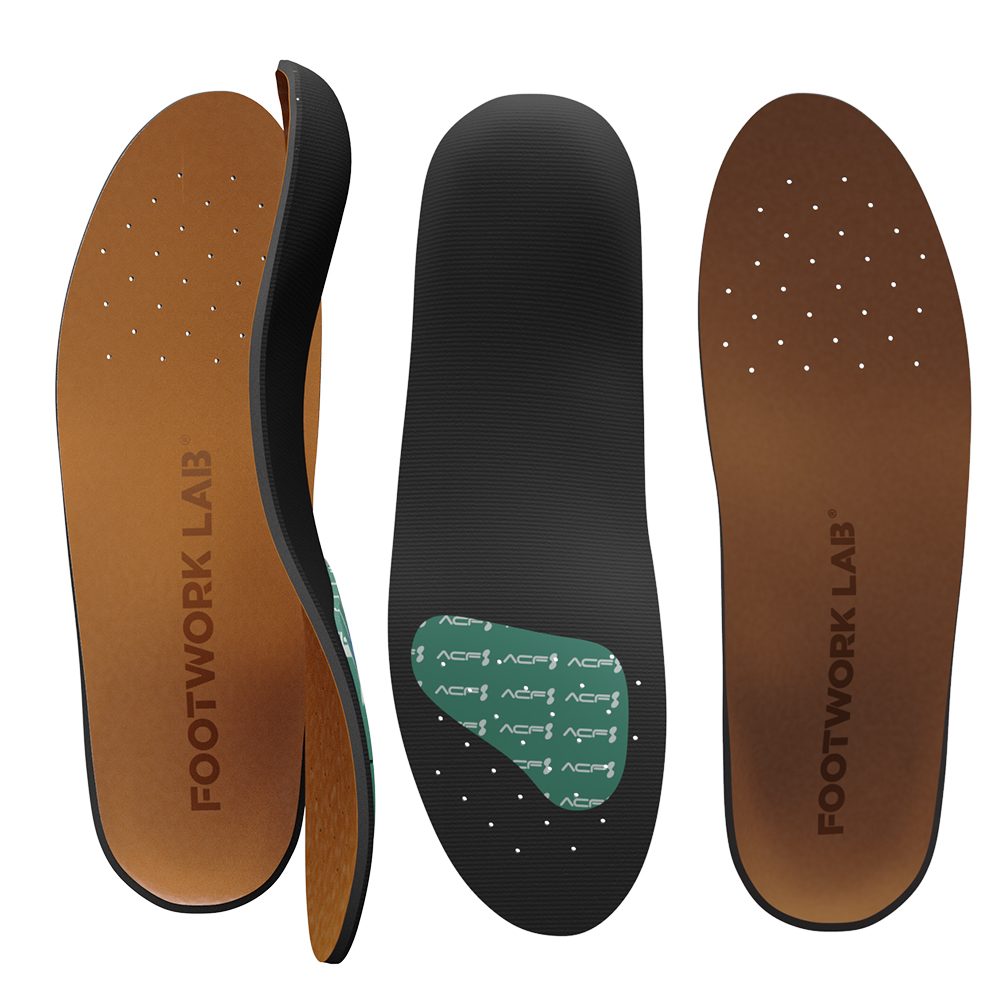
Four features carry most of the comparison. Ask for them in writing from each supplier and put
the answers next to each other.
- How the geometry is determined. Standard shape and size, adapted from measured
data, or built from an individual profile. This is the single most important line in the
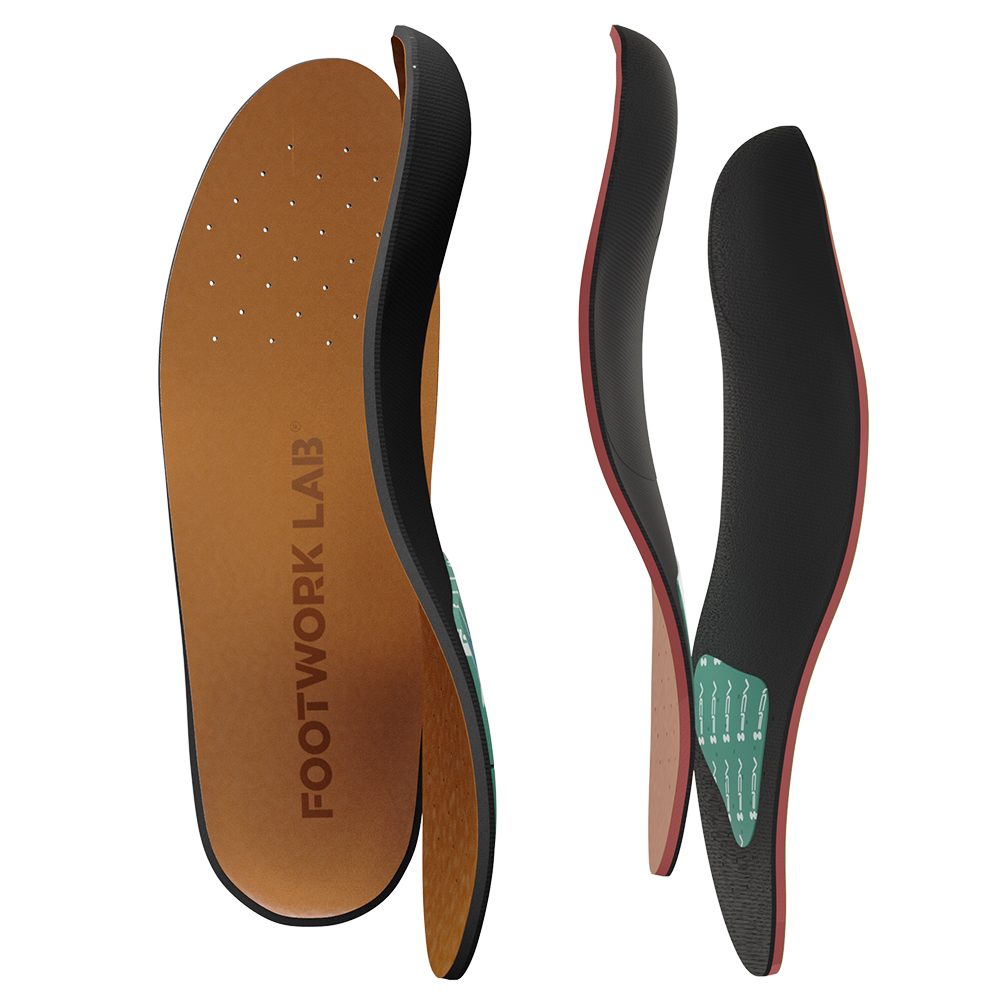
specification, and it is the one most often left vague. - Structure and layering. How many layers, what each contributes, and where the
supportive structure sits. A pair described only as “multi-layer” describes nothing; a pair
described layer by layer can be compared. - Forming process. Whether the shape is pressed, moulded, machined or assembled,
and how consistently the process reproduces the same profile within a batch. Consistency is a
quality question, not a cosmetic one. - Durability expectations. How the assembly is expected to behave under months of
use in the intended footwear and activity. Ask how the claim is supported, not just what it
is.
Two additional lines belong in the comparison even though they are not about the product. The
first is the minimum order quantity and whether models and sizes can be mixed; our insole minimum is
two hundred pairs with mixing permitted, which matters when a buyer wants to trial a range. The
second is the sample process: what a sample represents, whether it is produced under the bulk
process, and how quickly it ships. Ours leave within three days.
Once those six lines are written down, the conversation stops being about vocabulary and starts
being about engineering. That is a much better place to negotiate from.
Fit, volume and the shoe again
It is tempting to handle fit as a secondary question once the clinical specification is settled.
In our experience it is the opposite: fit is the gate that decides whether the specification is ever
tested in real life.
An insole sits inside a shoe, and the shoe’s internal volume was allocated before the insole
existed. Remove a removable footbed and you recover some volume; add an insole and you spend it.
Exceed what is available and the wearer feels it within minutes — instep pressure, a lifted heel, or
a shoe that suddenly seems half a size too small. None of these are quality defects. They are
specification errors, and they are the reason we ask for footwear details before anything is
drawn.
There is a useful habit here for buyers who supply several footwear categories. Rather than
specifying one design and adapting it, specify per category and let the design follow the footwear.
Footwear families differ in last shape, depth and construction, and those differences are stable
enough to design around once they are known.
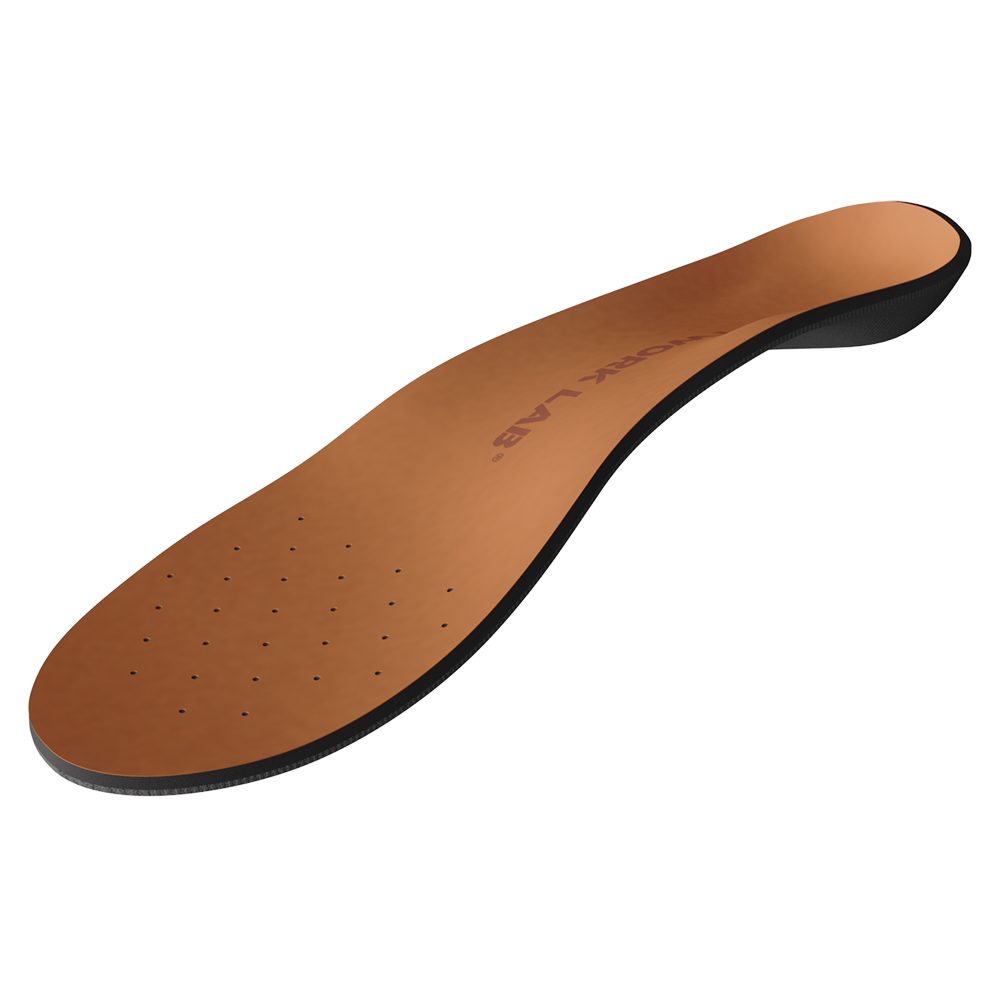
There is one more comparison line that experienced buyers always add: how the design is expected to interact with the shoe’s own midsole. A sports shoe already contains a cushioning layer, and an insole placed above it does not simply add to the shoe’s behaviour — it changes how that behaviour is experienced. Suppliers who understand this will ask about the shoe before proposing a material, and their answers will be more specific as a result.
Materials, forming and durability
Materials matter, but they matter in service of structure and fit rather than on their own. A
buyer comparing two suppliers can learn more from three behavioural questions than from a material
list.
How does it change over months of use? Cushioning layers compress, supportive
layers fatigue, top covers wear. A supplier who can describe the expected change over the intended
service life is describing a product that has been thought about.
How consistent is it between pairs in a batch? This is where forming process
quality shows. A production line that reproduces the same profile reliably will produce a
predictable product; one that does not will produce variation the buyer pays for later in returns
and complaints.
How does it behave under repeated loading in the intended activity? A design
intended for daily walking and one intended for repeated training loading are not the same product,
even if they share a family name.
A fourth question is worth adding for buyers who work across markets: whether the material and
process choices carry any documentation the buyer’s own market expects. Our answer here is
deliberately narrow. Our documentation covers European Union certification and ISO quality system
certification, and we describe exactly that scope. We do not extend the claim, because a
manufacturer who overstates certification puts their customers in a difficult position in their own
markets.
A final comparison line concerns documentation. Buyers who distribute across several markets increasingly need to know what paperwork accompanies a consignment, and the answer is easier to obtain before an order than after. Ask what documentation is supplied as standard, what has to be requested, and in which languages it is available. We keep our own statements narrow and consistent with the certification we actually hold, which is the only sustainable position for a supplier working across borders.
What an orthotic insole is not
Trust in this category is built partly by being clear about limits, so it is worth stating them
plainly.
An orthotic insole is a support and alignment product. It is not a device that changes the
structure of a foot, and it is not a substitute for professional judgement about a person’s care.
The decision about what a particular person needs belongs to a qualified professional who has
examined them, and the insole is one tool within that decision rather than the decision itself.
This has a practical consequence for how a supplier should behave. When a client’s requirement
moves into territory that belongs to clinical judgement, the right response is to refer the question
back rather than to adjust the product specification and imply a promise. We take that position
consistently, including when it costs us an order, because the alternative would misrepresent what
insoles do.
The same restraint applies to comparisons. We do not name or disparage competing products, and we
do not present our range as superior to everything else on the market. A buyer should compare
specifications and decide; our job is to make the comparison possible by describing our own product
accurately.
Ordering: quantities, samples, customisation
The commercial mechanics are straightforward once the specification is agreed, and confirming
them early avoids surprises later.
Quantities
Our insole minimum order quantity is two hundred pairs, and models and sizes can be mixed within
an order. For a retailer or clinic trialling a range, mixing is usually more valuable than a lower
unit figure, because it answers the real question: which designs does this client base actually
want?
Samples
Samples ship within three days. Ask that samples be produced under the same process as the bulk
order, and ask what the sample includes — a single pair, a range, or a set across sizes. A sample
that represents the production process is the cheapest risk reduction available.
Customisation
We accept both ODM and OEM on insoles. ODM allows a design to be adapted from our existing
families, while OEM builds to your own specification. The relevant question is where you want the
design decision to sit, and how much of the range you want to own over time.
Capacity
Insole production runs at roughly five hundred to one thousand pairs per day. Ask how peak season
affects scheduling and plan the year rather than the order, particularly if you supply clinics whose
demand clusters.
Where the client also needs foot data to drive a design, we supply the equipment as well as the
insoles, and the minimum order quantity for machines is a single unit. The
technology overview explains how measurement and forming connect in
our workflow, which is useful context when deciding the order in which to invest.
Frequently asked questions
Is every orthotic insole built to an individual profile?
No. In trade usage the term covers standard shaped designs, designs adapted from measured data,
and devices built from an individual profile. All three can be described as orthotic insoles, so the
specification has to state how the geometry is determined rather than relying on the label.
What should I ask a supplier to compare two products fairly?
Ask four things in writing: how the geometry is determined, how the layers are structured and what
each contributes, how the pair is formed and how consistently, and how the assembly is expected to
behave over months of use in the intended footwear and activity.
What are your minimum quantities and mixing rules?
Two hundred pairs for insoles, with models and sizes mixable within a single order. For
machines, the minimum is a single unit, which lets a buyer trial a system in their own room before
standardising.
Do you support ODM and OEM?
We accept both on the insole line. ODM adapts an existing family to your requirement, while OEM
builds to your own design. On machines we accept ODM, and machine OEM is discussed case by case.
How long do samples take, and how long is bulk lead time?
Samples ship within three days. Bulk lead time depends on specification and quantity, and
capacity is roughly five hundred to one thousand pairs per day, so confirming a schedule at enquiry
stage is more reliable than assuming a standard window.
Can insoles be supplied alongside the equipment that measures the foot?
Yes. We manufacture both, which means the design conversation and the measurement conversation
can be handled by the same team rather than by two suppliers who have never spoken to each other.
What certification applies to your insole production?
Our documentation covers European Union certification and ISO quality system certification. We
limit statements to that documented scope and do not extend the claim to anything we cannot
evidence.
What we would do next
Ask your shortlisted suppliers for the four specification lines in writing, and request a sample
produced under the bulk process. If you are also specifying equipment, read
what to confirm before ordering custom orthotic insoles and
what goes into an arch support insole first, then look at the
range structure. Commercial questions — minimums, mixing,
customisation, scheduling — are answered openly on our FAQ page, and a
specification discussion against your own footwear list can start through
our contact page.
This article is intended for professional and educational reference.
It is not medical advice. Foot assessment equipment produces measurements and images; clinical
interpretation and any decision about care remain the responsibility of a qualified professional.
Certification scope is limited to the documentation we hold: European Union certification and ISO
quality system certification.