
Material-name searches like “poron orthotic insoles” are a healthy
sign: the buyer has moved past “what is an insole” and started asking what it is made of.
But a material name is the beginning of a sourcing conversation, not the end of one. The same
material performs differently depending on where it sits in the build, what sits above and below
it, and what the foot above it is actually doing — which is why this article handles the search
term as an entry point and walks the questions that turn a material request into a build
specification you can order with confidence.
FOOTWORK LAB produces custom orthotic insoles at its own plant in Ruichang, Jiangxi Province,
alongside the assessment equipment that generates order data. Material selection is a daily
conversation on our production floor — between the data a pair must serve and the palette of
materials that can serve it — and this article borrows from those conversations.
A caution about how this article reads: it will feel less like a product page than a methods
page, and that is deliberate. Material decisions are where the insole trade is most full of
confident nonsense — names quoted as benefits, benefits quoted as outcomes — and the antidote is
not better vocabulary but better method. The sections below therefore spend more time on how to
decide than on what to choose, because a buyer with a method can walk into any supplier
conversation — including one with us — and protect their own order.
Why a material name is a question, not a specification
Buyers arrive with a material name because a colleague recommended it, a competitor’s listing
features it, or a previous supplier used it. That is reasonable — materials earn reputations.
The mistake is treating the name as the specification. In an insole, a material is defined by
its role: what layer it forms, how thick the build runs there, what loads pass through it, and
what the layer above and below it contributes. The same material in two builds can produce two
different wearing experiences, both defensible by their own intent.
The professional sequence runs the other way: start from the foot and the use case, decide
what each region of the insole must do, and then select the material that does it. Buyers who
lead with a material name and work backwards can still get a good product — but they have
handed the specification decision to a keyword, and a keyword has never met the foot in
question.
When a buyer asks us for a specific material by name, our first question is what they want
that material to do. The answer usually opens a better conversation than the name itself —
cushioning that survives daily retail-floor hours, a top sheet that manages moisture in a warm
climate, a shell region that keeps its shape over months of wear.
What cushioning materials are actually asked to do
In the cushioning role, a material faces a triangle of demands that no single number
captures: how it feels on first wear, how it behaves after hundreds of hours, and how it
interacts with the layers around it. Materials that feel generous on day one can flatten early;
materials that hold their structure can feel firm until the wearer adapts. Neither is wrong —
they are different trades, and the use case chooses between them.
The trade-off has a practical corollary for buyers: when you evaluate samples, evaluate them
against the use case’s clock, not against the first impression. A build intended for all-day
wear deserves a week of all-day wear before judgement; a sport build deserves its surfaces and
its sessions. First-touch softness is the least predictive quality in the stack and the one
buyers most often buy on. Write the evaluation window down before the samples arrive, and the
material conversation with your supplier will start from evidence instead of enthusiasm.
This is why volume matters in material selection. A factory producing hundreds of pairs a
day sees how builds wear, which combinations come back for remakes, and which layer
combinations survive their intended use. Our own production — roughly five hundred to a
thousand pairs daily — feeds that feedback loop. A workshop producing a handful of pairs a
week cannot accumulate the same evidence, which is one honest reason to weigh factory
experience when material choices matter.
The triangle also explains why materials get reputations, and why reputations mislead. A
material that earned loyalty in long-wear occupational builds may disappoint in a warm-climate
top-sheet role; a combination praised by one wearer group may feel wrong to another.
Reputations attach to names; performance attaches to roles. The buyer’s protection is to
translate every reputation back into a role question — what job did it do, for whom, in what
conditions — before the name enters your specification.
The lesson for buyers: when comparing quotes that name the same material, ask what role the
material plays in each build and what sits around it. Identical material names on different
builds are not identical products.
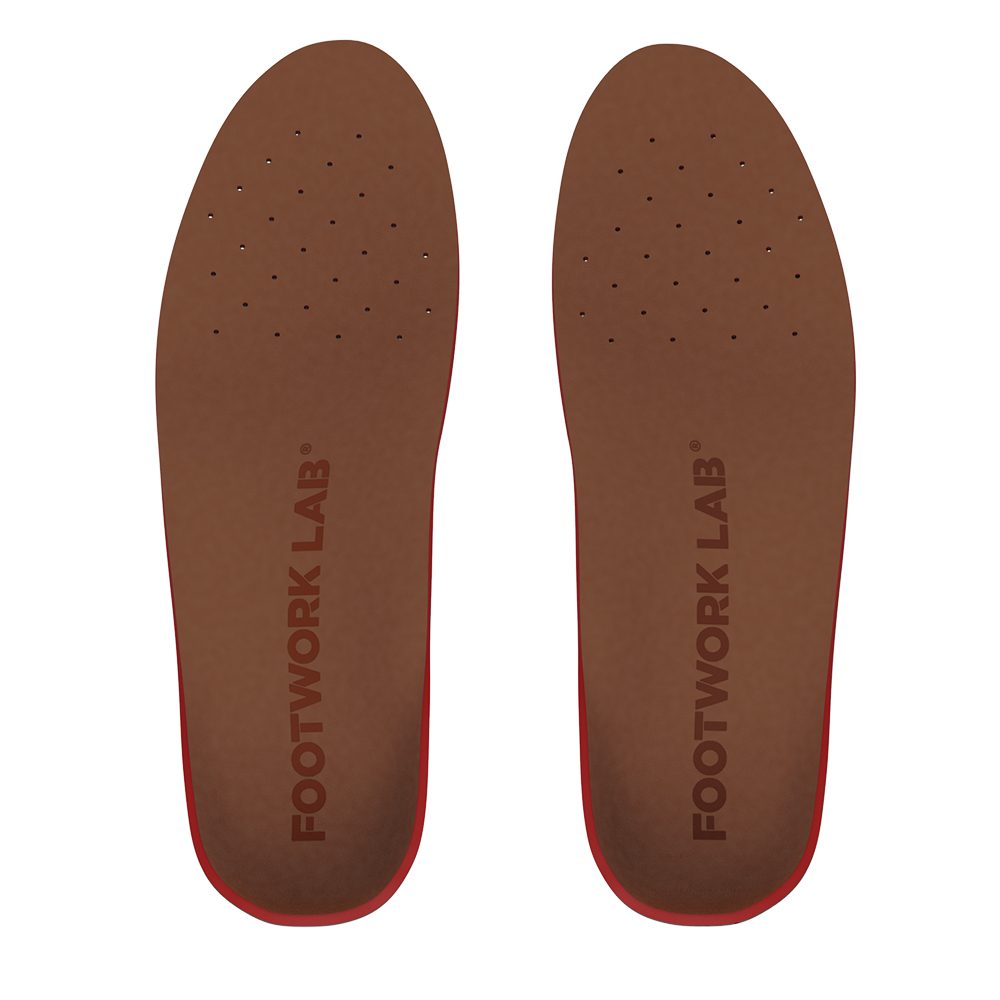
Top sheets, shells and the layers between
Above the cushioning sits the top sheet — the surface against skin and sock. Its job is
contact quality: friction behaviour, moisture handling, temperature feel, and durability at
the edges where wear concentrates. Top-sheet choice is where climate and footwear type enter
the specification; a build destined for hot, humid conditions asks different questions than
one for a temperate retail environment.
Top-sheet questions are also the ones end customers answer most reliably, which makes them a
useful feedback channel. Retail staff and clinic patients may not discuss mid-layer density,
but they will tell you — unprompted — whether the surface felt right, whether it got slippery,
how it behaved after a long day, how the edges wore. Build a habit of collecting those remarks
and passing them to your supplier verbatim; verbatim is important, because the translation into
specification is the supplier’s job, and over-summarised feedback loses the detail that drives
the adjustment.
Below the discussion of softness sits the shell — the structural region that gives the
insole its shape and its stance on the foot. Shells trade stiffness against conformity, and
the recorded load pattern from an assessment is what should drive the choice, which is why
custom production starts with measurement rather than with a material catalogue.
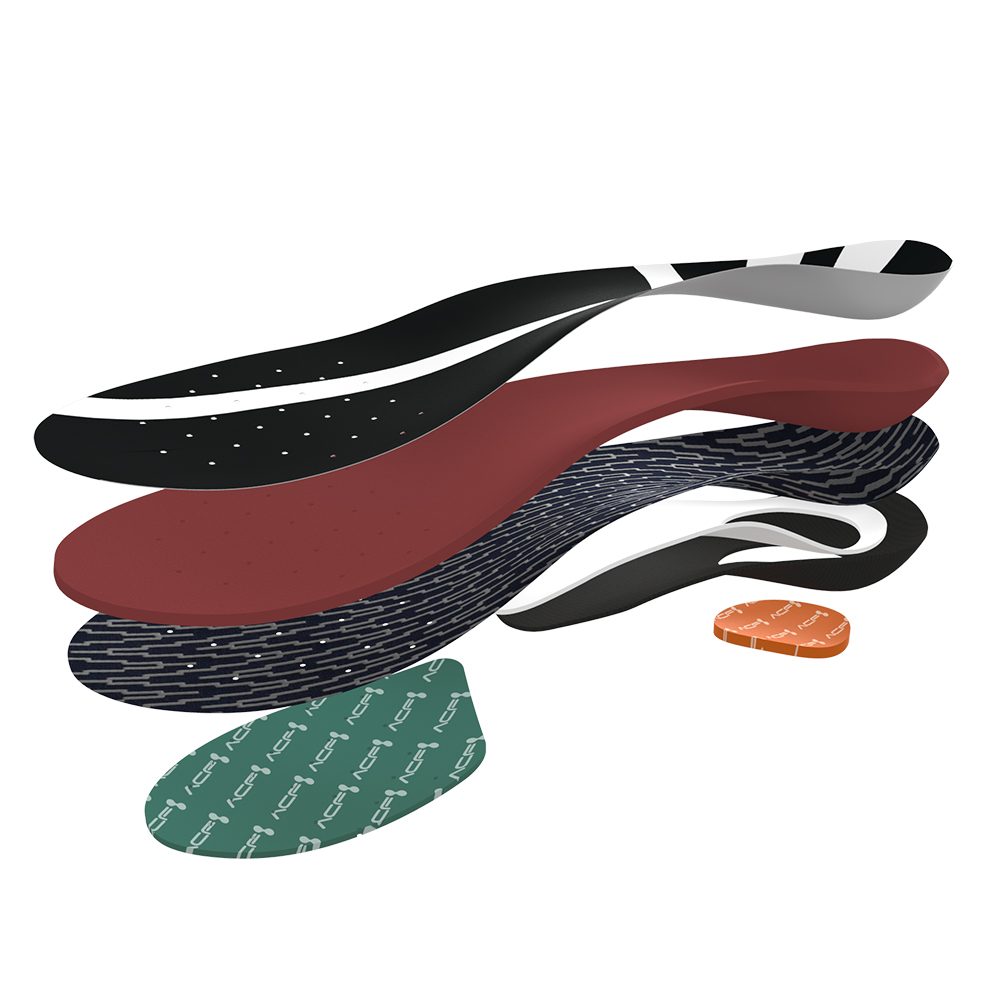
Between shell and top sheet sit the working layers, and this is where most build
personality lives: where the build gives way, where it holds, how the regions transition. A
skilled specifier thinks in this stack, not in a single material name — and a buyer who
interviews suppliers at the stack level will hear very quickly who specifies and who
assembles.
Buyers who want a quick competence check on a supplier can borrow an exercise from our own
quality reviews: hand the supplier one recording — your own, with details removed — and ask
them to talk through, region by region, what they would build and why. Ten minutes of that
conversation tells you whether the person across the table thinks in stacks and roles or in
catalogues and names. It is the single most predictive ten minutes available in a material-led
sourcing process, and it costs nothing but preparation.
How to brief a supplier on a material request
If you arrive with a material name, brief it properly. State the role you want it to play:
full-length cushioning, forefoot pad, top sheet, or one region of a zoned build. State the use
case: how many hours a day, on what surfaces, in what footwear, in what climate. State the
service context: who fits it, how it is sold, what happens if a pair does not suit.
With that brief, a production team can answer three ways: the named material fits the role;
it fits with adjustments — thickness, placement, combination; or it does not fit the role and
here is what does, with the reasoning. All three are good answers. The only bad answer is a
quote that accepts the name and says nothing about the role — that supplier is selling a
keyword back to you.
Verifying material claims before volume
Material claims verify the same way everything else in this trade verifies: with samples and
with process. Ask for sample pairs built to your brief, on the supplier’s normal timeline —
ours dispatches within three days of specification approval. Wear them, wash them, work them;
materials reveal themselves to use faster than to datasheets. Ask which layers in the sample
correspond to the material you asked about, so the evaluation tests the right thing.
Then ask about consistency at volume: the sample was built on a Tuesday by a senior
technician; what guarantees the thousandth pair matches it? The answer should be process —
incoming material checks, build documentation, inspection against specification — not
adjectives. Our own answer is the line itself: five hundred to a thousand pairs a day,
inspected against individual specifications, because a process that only works in small
batches is not a production process.
Consistency questions apply to the material itself, not only the process. Batches vary;
incoming checks are how a factory notices. Ask how incoming material is verified against the
reference the sample was built from, and how a batch deviation is handled. The question is
concrete, and suppliers with real incoming control answer it in a sentence. It pairs naturally
with the remake question from the verification list: the two together describe how a factory
behaves when reality disagrees with the plan, which is the only behaviour that ultimately
matters at volume.
Certification claims deserve the same discipline: ask what documentation the supplier holds
and read the scope. Ours covers European Union certification and ISO quality system
certification, and we keep our statements inside that scope — a practice we recommend buyers
demand from every supplier on their shortlist.
One more verification layer that buyers under-use: ask the supplier what they refuse. Every
production team has combinations it will not build — materials that bond poorly, stacks that
wear badly, roles a given material cannot fill. A supplier who can name their refusals, with
reasons, is demonstrating the same evidence loop the earlier section described. A supplier who
claims every combination is possible is describing a sales team, not a production floor. The
refusals are the fingerprint; ask for them early.
Where material-led requests fit in a custom programme
Material-led buying is not a beginner’s error — it is often how a market signals its
preferences back to a supplier. Distributors hear “the pair with that cushioning lasted” from
retail staff; clinics hear which top sheets patients mention. The mature workflow keeps both
directions open: the assessment and the specifier choose the build, and market feedback
informs the material palette the specifier works from.
That is how we handle named-material requests in production: the name opens the dialogue, the
data and the use case shape the build, and the sample verifies it. Buyers who run the same
sequence — brief, specification, sample, volume — get the material they asked for where it
helps and a better build where it does not.
The sequence also protects the relationship when the market shifts. Material availability,
price movements and regional preferences all move over a product’s life, and a buyer whose
orders are anchored to roles — rather than to a single name — can absorb those shifts with the
supplier’s help instead of rediscovering the problem alone. Flexibility lives in specifications
written at the role level; fragility lives in specifications written at the name level. It is
one more reason the brief matters more than the name that opened it.
Frequently asked questions
Can you build insoles with a specific cushioning material I request?
Yes — after the brief. Tell us the role the material should play, the use case it must
survive, and the service context. We will confirm where it fits in the build or propose what
does, with reasoning tied to the recorded data.
What data do you need to specify the build?
A plantar pressure recording in stance and movement plus posture capture. Assessment
hardware such as our F2 and FMP platforms produces both in one session.
What is your minimum order?
Two hundred pairs, mixed across models and sizes, so a first programme can cover realistic
variation rather than one repeated build.
How fast can I see samples?
Sample pairs dispatch within three days of specification approval, built to your brief so
the evaluation tests the right layers.
How do you keep quality consistent at volume?
Production runs at roughly five hundred to one thousand pairs per day, and each pair is
inspected against its own specification — a systematic check, not a spot check.
What certification documentation do you hold?
European Union certification and ISO quality system certification, and we keep our claims
within exactly that scope.
Are you a factory or a trading company?
A factory. Insole development and production happen in-house at our Ruichang plant,
operating since 2018.
What we would do next
Turn the material name into a brief and send it with a real recording. The F2 and FMP platform generates the pressure and posture data a
specification needs; the insole categories page shows the
model families a build can start from; and the FAQ page holds the standing
answers on MOQ, samples, OEM and ODM, and logistics. The arch support
insole guide shows a full build breakdown, and the contact
page reaches the production team that answers material questions with builds, not
brochures.
This article is intended for professional and educational reference.
It is not medical advice. Foot assessment equipment produces measurements and images; clinical
interpretation and any decision about care remain the responsibility of a qualified professional.
Certification scope is limited to the documentation we hold: European Union certification and ISO
quality system certification.